Jiayuguan Travel Guide 2026
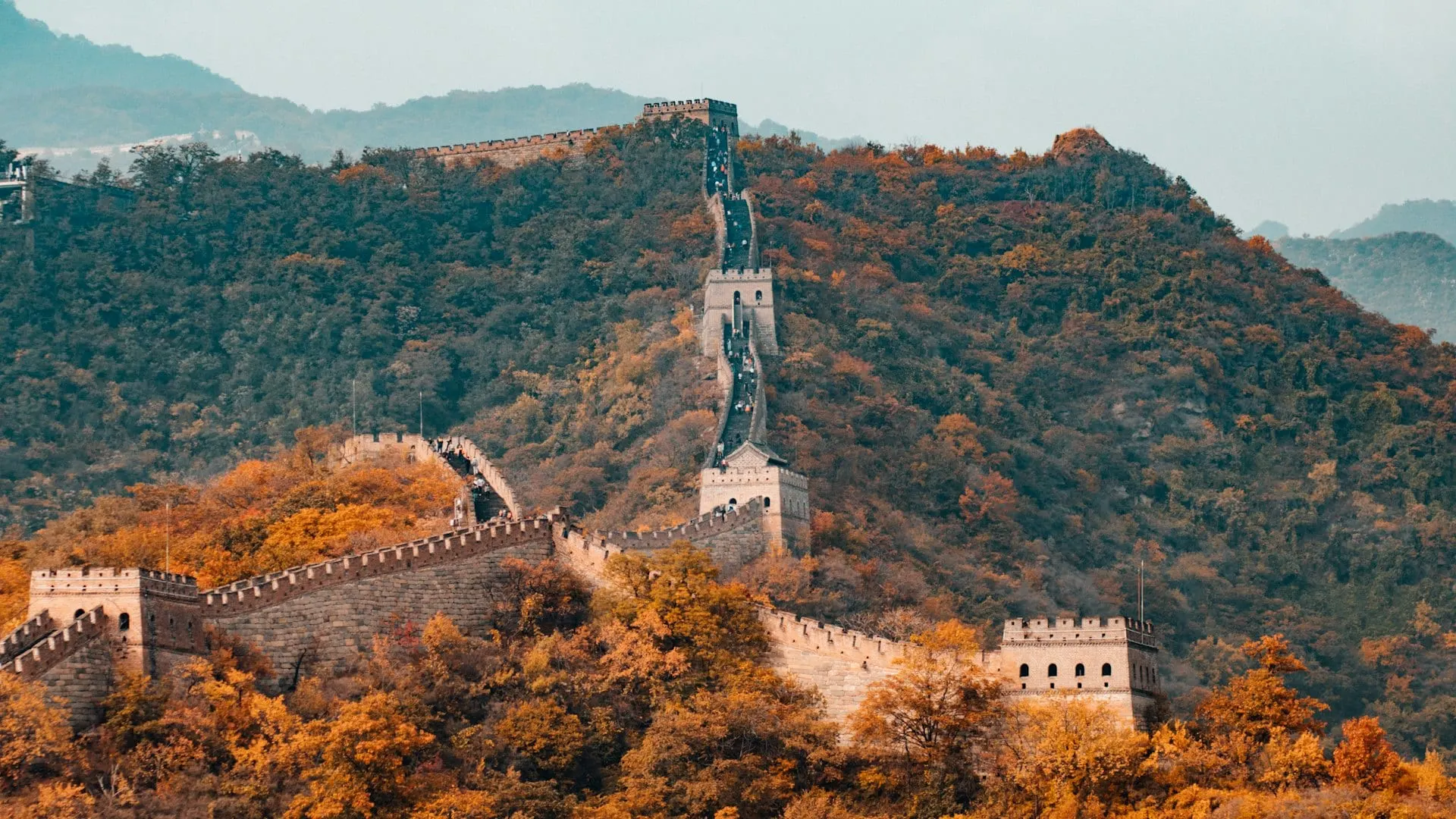
The western end of the Ming Great Wall — Jiayuguan Fort stands where the wall meets the Gobi Desert and the Qilian Mountains, with the Overhanging Great Wall climbing a sheer ridge and the Wei-Jin tombs holding 1,700-year-old brick murals.
Last updated:
Quick Answer
Jiayuguan (嘉峪关, Jiāyùguān) is not a big city — roughly 300,000 people — but it holds one of the most evocative sites on the Chinese Silk Road: Jiayuguan Fort (嘉峪关关城), the western terminus of the Ming dynasty Great Wall. Built in 1372, the fort is a massive walled compound at the narrowest point of the Hexi Corridor, where the Qilian Mountains meet the Gobi Desert. It is the largest and best-preserved pass on the entire Great Wall system — a fortress so imposing that the Chinese called it "the Impregnable Pass Under Heaven" (天下第一雄关). From the top of the gate tower, you can see the Great Wall snaking west into the desert and the snow-capped Qilian peaks rising to the south. The Overhanging Great Wall (悬壁长城, Xuánbì Chángchéng), 8 km north of the fort, climbs a 150-meter ridge at a 45-degree angle — it is the most dramatic section of wall on the Ming frontier. Jiayuguan is a 1-2 day stop, compact and well-organized, best visited as part of a Hexi Corridor itinerary linking Zhangye (1.5h by HSR) and Dunhuang (3.5h by HSR). Budget roughly ¥100-160 per day for mid-range comfort.
| Worth visiting | Yes — Jiayuguan Fort is the definitive Ming Great Wall terminus, the Overhanging Great Wall is spectacular, and the Wei-Jin tombs are a hidden gem |
|---|---|
| Recommended days | 1-2 days |
| Best time to visit | May-June and September-October (clear skies, manageable temperatures; avoid July-August midday heat and winter winds) |
| Daily budget | $35 (backpacker) / $100 (mid-range) / $260+ (luxury) |
| Family friendly | Yes — the fort has open courtyards for children to explore, the Overhanging Wall is an exciting climb for older kids, and the sites are compact |
| Solo friendly | Yes — the fort is easy to explore alone, the logistics are straightforward, and the city is small and safe |
| Airport | Jiayuguan Airport (JGN) — 10 km northeast, flights from Xi'an (2.5h), Lanzhou (1.5h), Beijing (3h), limited schedule |
| High-speed rail | Yes — Zhangye (1.5h, ¥65-90), Lanzhou (5h, ¥210-290), Dunhuang (3.5h, ¥130-180), Urumqi (7h, ¥350-430) |
| Language | Mandarin with Gansu dialect; English is rare outside hotels |
| Currency | CNY (¥) — Alipay and WeChat Pay widely accepted; carry ¥200 cash for small vendors |
| Time zone | China Standard Time (UTC+8) |
| Last updated | 2026-06-18 |
Jump to:
Jiayuguan Fort · Overhanging Wall · Wei-Jin Tombs · History · Food · Getting There · Getting Around · Top Attractions · Where to Stay · Weather · Tips · Itineraries · Practical Info · Emergency Contacts · FAQ
Why visit Jiayuguan? Is a 600-year-old fort worth a special trip?
Jiayuguan Fort is where the Great Wall of China ended. Not the eastern end at Shanhaiguan on the Bohai Sea — the western end, where the wall ran out of China and into the desert. Standing on the gate tower and looking west, you see the Gobi Desert stretching to the horizon with the wall disappearing into it — a thin line of rammed earth vanishing into the haze. Behind you, the Qilian Mountains rise white-capped and impassable. This is the narrowest point of the Hexi Corridor, the strategic choke point where every Silk Road caravan, every army, every envoy, and every exile had to pass through. Beyond the gate was "outside the pass" (关外, guān wài) — exile, the unknown, the barbarian lands. Inside was the empire. The fort itself is magnificent — not a ruin, but a fully walled Ming dynasty military compound with inner and outer walls, three gate towers, corner watchtowers, a parade ground, a temple, and a command post. It is the largest and best-preserved pass on the entire Great Wall system, restored but not Disneyfied. The Overhanging Great Wall, 8 km north, climbs a ridge at an angle that genuinely makes you question the sanity of the soldiers who built it. The Wei-Jin tombs, 20 km northeast, contain 1,700-year-old brick murals of extraordinary vitality — farmers, musicians, cooks, hunters — painted by hands that have been dust for nearly two millennia. Jiayuguan is a small city — 300,000 people, one main street, an economy built on steel and tourism. It is not a destination in itself. It is a stop on the Hexi Corridor, the 1,000-km passage between the Qilian Mountains and the Gobi Desert that was the Silk Road. The classic route: Zhangye (2 days, Danxia landforms) → Jiayuguan (1-2 days, Great Wall fort) → Dunhuang (2-3 days, Mogao Caves). Jiayuguan is the military history chapter between Zhangye's natural landscapes and Dunhuang's Buddhist art. One full day covers the main sites. Two days lets you add the Wei-Jin tombs and see the fort at both sunrise and sunset.
What is the history of Jiayuguan: the end of the Ming Great Wall?
Jiayuguan Fort was built in 1372, just four years after the Ming dynasty expelled the Mongol Yuan from China. The Ming emperors had decided on a defensive strategy — rather than expanding into Central Asia as the Han and Tang had done, they would fortify the frontier and control access. Jiayuguan was the linchpin: the narrowest point on the Hexi Corridor, only 15 km wide between the Qilian Mountains and the Heishan (Black Mountains), where a single fortress could control all movement between China and Central Asia. The fort was expanded and reinforced over the next 150 years. By the mid-16th century, it was a self-contained military city with barracks for 1,000 soldiers, granaries, wells, temples, and a sophisticated defense system of interlocking walls, gates, and beacon towers. The Overhanging Wall and the First Strategic Post were added in 1539, extending the defensive line north and south to the mountain barriers. The combined system made Jiayuguan essentially impassable to an attacking army. The fort was never taken by force. Its military career ended not with a siege but with the decline of the Silk Road — as sea trade replaced overland routes and the Qing dynasty expanded China's borders far to the west, Jiayuguan lost its strategic purpose. By the 19th century, it was a backwater garrison. The fort fell into disrepair and was restored in the 1980s-2000s to its current state. The psychological significance of Jiayuguan is as important as the military one. For Chinese civilization, the fort marked the boundary between order and chaos, civilization and wilderness. Exile "beyond the pass" (关外) was a feared punishment. The gate towers face west — toward the unknown — and the fort's Chinese name, 嘉峪关 (Jiāyùguān), means "Excellent Valley Pass," a deceptively gentle name for the most formidable fortress on the frontier. The Wei-Jin tombs, built 1,000 years before the fort, tell a different story — of a time when the Hexi Corridor was a settled, prosperous region with a mixed population of Han Chinese, Central Asian traders, and steppe peoples. The brick murals show a world of abundant food, music, and daily contentment — a reminder that the Corridor was a place of life and exchange, not just military confrontation.
What to eat in Jiayuguan: Gansu beef noodles and frontier fare?
Jiayuguan food is Gansu cuisine with a frontier twist — hearty, wheat-based, built around beef, lamb, and noodles. The city's steel-industry workforce means there are also excellent Sichuan and northeastern Chinese restaurants alongside the local Gansu options. The essential foods: Lanzhou beef noodles (兰州牛肉面, Lánzhōu niúròu miàn). The universal Gansu staple. Hand-pulled wheat noodles in clear beef broth with sliced beef, radish, chili oil, and green onion. ¥10-18 per bowl. Jiayuguan does a solid version — look for shops with visible noodle-pulling. Order 二细 (èr xì, medium-thick) for the standard experience. Grilled lamb skewers (烤羊肉串, kǎo yángròu chuàn). Jiayuguan's proximity to the Qilian pastures means excellent lamb. The night-market stalls along Xinhua Road (新华路) serve charcoal-grilled skewers seasoned with cumin, chili, and salt. ¥3-6 per skewer. Order by the handful — five skewers minimum. Jiayuguan roasted whole lamb (嘉峪关烤全羊, Jiāyùguān kǎo quán yáng). A local specialty for groups — a whole lamb roasted over charcoal for 3-4 hours until the skin is crisp and the meat falls apart. ¥600-1,000 for a whole lamb (feeds 8-12 people). Available at specialty restaurants — order a day in advance. Not practical for solo travelers or couples, but if you are in a group, it is a memorable meal. Gansu cold noodles (甘肃凉皮, Gānsù liángpí). Cold wheat-starch noodles with vinegar, chili oil, sesame paste, cucumber, and bean sprouts. ¥8-12 per bowl. A perfect light lunch in summer. Dapanji (大盘鸡, dàpánjī). "Big plate chicken" — a Xinjiang dish that has spread throughout the Hexi Corridor. Chicken braised with potatoes, peppers, and chili, served on a massive platter with hand-pulled noodles to soak up the sauce. ¥60-90 for a large plate (feeds 2-3 people). Stewed lamb with bread (羊肉泡馍, yángròu pàomó). The Gansu version of the Xi'an classic — chunks of lamb in rich broth with torn flatbread soaking in the bowl. ¥25-40. Hearty winter food. For vegetarians: Lanzhou beef noodles can be ordered without meat (素面, sù miàn). Cold noodles (凉皮) are vegetarian by default. Sichuan restaurants in the city have vegetable stir-fries and mapo tofu (麻婆豆腐) — ask for no meat (不要肉, bùyào ròu). A printed vegetarian card in Chinese is recommended.
How to get to Jiayuguan: high-speed rail, flights, and Hexi Corridor connections?
Jiayuguan South Railway Station (嘉峪关南站) is the high-speed rail station, about 8 km south of the city center on the Lanzhou-Urumqi HSR line. This is how almost all foreign visitors arrive. From Zhangye: 1.5 hours, ¥65-90 second class, multiple daily trains. From Lanzhou: 5 hours, ¥210-290. From Dunhuang: 3.5 hours, ¥130-180. From Urumqi: 7 hours, ¥350-430. The HSR station is connected to the city center by taxi (¥15-20, 15 min) and bus 12 (¥1, 25 min). Jiayuguan Airport (JGN) is 10 km northeast of the city with limited flights — primarily from Xi'an (2.5 hours, ¥500-900), Lanzhou (1.5 hours, ¥400-600), and Beijing (3 hours, ¥800-1,400). The HSR is generally more practical for most itineraries. Jiayuguan Railway Station (嘉峪关站, conventional rail) is in the city center and handles slower K/T trains. Most travelers use Jiayuguan South (HSR). Jiayuguan is a natural stop on the Hexi Corridor itinerary. The classic westbound route: Lanzhou → Zhangye (2 days) → Jiayuguan (1-2 days) → Dunhuang (2-3 days). Eastbound: Dunhuang → Jiayuguan → Zhangye → Lanzhou. The HSR connections are excellent and the distances are manageable — no single leg is more than 5 hours.
How to get around Jiayuguan: taxis, buses, and site access?
Jiayuguan is a compact city and the sites are well-connected. Taxis are the easiest transport — flagfall is ¥5, a ride to the fort costs ¥15-20 (6 km west of the city center), to the Overhanging Wall ¥25-30 (8 km north), to the Wei-Jin tombs ¥40-50 (20 km northeast). A half-day taxi circuit covering the fort, Overhanging Wall, and First Strategic Post costs ¥120-150. A full day adding the Wei-Jin tombs costs ¥200-250. Arrange through your hotel front desk. Public bus: Bus 4 runs from the city center to the fort (¥1, 20 min). Bus 6 runs to the Overhanging Wall area. The Wei-Jin tombs have no public bus — you need a taxi or hired car. Bus routes and announcements are Chinese-only. DiDi operates in Jiayuguan with reasonable supply in the city center, thinner at the sites. For the fort and Overhanging Wall, DiDi is fine. For the Wei-Jin tombs, arrange a return pickup with the driver. The combined ¥110 ticket for the fort includes the Overhanging Wall and the First Strategic Post. You can visit them on the same day or across multiple days — the ticket is valid for one entry at each site. The Wei-Jin tombs require a separate ticket (¥50). Walking: the city center is walkable. The fort is not walkable from the city (6 km, no pedestrian path along the highway). Always use transport.
What are the top attractions in Jiayuguan, ranked and described?
1. Jiayuguan Fort (嘉峪关关城). ¥110 (combined ticket). The definitive western terminus of the Ming Great Wall and the largest pass fortress on the entire wall system. The fort is a walled rectangle roughly 700 by 500 meters, with inner and outer walls, three gate towers (the Guanghua Tower to the east, the Rouyuan Tower to the west, and the central gate), corner watchtowers, a parade ground, a Guandi Temple, and a command post. Climb the Rouyuan Tower for the iconic view west — the wall snaking into the Gobi, the Qilian Mountains on the left, the Black Mountains on the right. The fort is restored (1980s-2000s) but the restoration is well-done — the scale and setting are authentic. Allow 2-3 hours. The Great Wall Museum at the entrance provides excellent context — visit it first. Best in late afternoon when the setting sun turns the rammed-earth walls gold. 2. Overhanging Great Wall (悬壁长城). Included in combined ticket. A 1.5-km restored section of the Ming wall that climbs a 150-meter ridge at a 45-degree angle. The climb is about 400 steep steps. At the top, a beacon tower offers a panorama: the Gobi stretching north, the fort visible to the south, the Qilian peaks on the horizon. The wall literally hangs off the cliff face — from the base, it looks like it is about to slide off the ridge. Built in 1539 as the northern defense spur. Allow 1-1.5 hours. Go in the morning when the light is on the wall and temperatures are cooler. If you are short on time or not physically up for the climb, the fort alone is sufficient — the Overhanging Wall is spectacular but not essential. 3. Wei-Jin Tomb Murals (魏晋墓壁画). ¥50. A 1,700-year-old cemetery of over 1,400 brick tombs scattered across the Gobi 20 km northeast of the city. Only one tomb (Tomb 6) is open to the public, but the brick murals inside are extraordinary — scenes of farming, cooking, hunting, feasting, music, and dancing painted with brush and mineral pigments on individual bricks. The paintings are intimate and lively, showing daily life with a warmth that survives the millennia. The tomb is small and you view the murals through a glass panel, but the experience is powerful — you are standing in a 1,700-year-old burial chamber looking at paintings that have never been moved. The site has few visitors (most tourists skip it for the fort) and the Gobi setting is stark and silent. Allow 1.5 hours including the 25-minute drive each way. A genuine hidden gem. 4. First Strategic Post (长城第一墩). Included in combined ticket. The westernmost beacon tower of the Ming Great Wall — a weathered earthen mound on a cliff above the Taolai River canyon, 7 km south of the fort. The tower itself is a dirt pile and honestly unimpressive. But the canyon setting — a sheer 56-meter drop into the Taolai River gorge — is dramatic, with a glass-bottomed viewing platform extending over the cliff edge. The site takes 30-45 minutes. Combine with the fort (it is on the way). Worth it for the canyon view; do not go just for the tower. 5. Jiayuguan Great Wall Museum (嘉峪关长城博物馆). Free with combined ticket. A well-designed museum at the fort entrance with exhibits on Great Wall history, construction techniques (rammed earth vs. brick, signal-fire systems, logistics), and the specific role of Jiayuguan in the Ming defense network. The models of the pass system and the beacon-tower communication network are excellent. Allow 45 minutes to 1 hour. Visit before entering the fort for context. 6. Xuanbi Great Wall — South Section. A less-visited, more ruined section of the Overhanging Wall running along the Taolai River canyon rim south of the fort. More atmospheric than the restored northern section — the wall is crumbling rammed earth rather than rebuilt brick, and you will likely be alone. Requires a car to access (10 km south of the fort). No separate ticket needed with the combined pass. Allow 30 minutes for photos. For Great Wall purists who prefer ruins to restorations. 7. Qiyi Glacier (七一冰川). ¥100 (if open). A retreating glacier at 4,300m in the Qilian Mountains, 116 km southwest of Jiayuguan. It was marketed as "Asia's most accessible glacier" — drive to 3,800m, hike 2 hours to the glacier tongue. However, as of June 2026, access is restricted due to glacial retreat and safety concerns. Check locally at your hotel or the Jiayuguan tourism office before planning — it may be closed or require a guide. If open: full-day excursion, bring warm layers, water, and altitude tolerance. The glacier has retreated dramatically in the past 20 years and is not the spectacle it once was.
Where to stay in Jiayuguan: neighborhoods, prices, and recommendations?
The city center along Xinhua Road (新华路) and near the Donghu Lake (东湖) is the best base. It is walking distance to restaurants, the night market, and the bus stops for the fort. Mid-range options: Jiayuguan Hotel (嘉峪关宾馆, ¥200-350), Jinjiang Inn Jiayuguan (¥180-280). The Jiayuguan International Hotel (嘉峪关国际大酒店) is the top city-center option at ¥350-500. Near Jiayuguan South Railway Station (嘉峪关南站) there is a cluster of budget chain hotels (¥120-200) convenient for late HSR arrivals or early departures. The station area is functional and charmless. Near the fort (Jiayuguan Fort area, 6 km west of the city): a few guesthouses and small hotels have opened near the fort entrance. Staying here lets you be at the fort for opening time (08:00) and sunset. Prices run ¥150-250 per night. The tradeoff: few restaurants, no nightlife, and you are 6 km from the city center. For backpackers: the Jiayuguan Youth Hostel near the city center has dorm beds at ¥45-60 and a helpful English-speaking desk for Silk Road travel advice. A note on seasons: Jiayuguan hotels fill up during the summer Silk Road tourism peak (July-August) and the National Day holiday (first week of October). Book 3-7 days ahead during these periods. The rest of the year, walk-in availability is generally fine. Foreigner registration: as everywhere in China, hotels must register foreign guests. Budget hotels may refuse foreign guests. Book through Trip.com with the foreign-guest filter.
What is the weather in Jiayuguan and when is the best time to visit?
Jiayuguan has a cold desert climate — hot summers, cold winters, very low precipitation, and strong winds year-round. January: -13°C to -3°C. Cold, windy, dry. The fort is bleak but atmospheric. Lowest tourist numbers. February: -9°C to 2°C. Still cold. Spring Festival may bring domestic visitors. March: -3°C to 10°C. Warming but windy. Dust storms from the Gobi possible. April: 4°C to 18°C. Pleasant — cool mornings, warm afternoons. The start of the good season. May: 10°C to 24°C. Excellent. Clear skies, comfortable temperatures, Qilian peaks snow-capped. The first great month. June: 15°C to 29°C. Good — warm but not scorching. Long daylight hours for sightseeing. July: 18°C to 32°C. Hot. The fort has minimal shade. Sightsee early morning or late afternoon. August: 17°C to 31°C. Marginally cooler than July. Peak domestic tourism — the fort is crowded. September: 11°C to 25°C. Excellent — cooling down, clear skies, the best photography month. Fort walls glow gold in autumn light. October: 3°C to 16°C. Good — crisp, clear, autumn colors. Cold at night. The second-best month. November: -5°C to 6°C. Getting cold. Fewer tourists. The fort is atmospheric in the low light. December: -12°C to -2°C. Cold, windy, quiet. Lowest prices. The consensus best months are May, June, September, and October. July and August are hot and crowded but visitable with morning/late-afternoon timing. Winter (November-March) is cold but the fort under snow with the Qilian peaks behind it is a magnificent sight — if you can handle the cold and the wind, winter Jiayuguan has a stark, solitary beauty that the summer crowds erase. Wind is a constant factor — the Hexi Corridor funnels wind between the mountain ranges, and Jiayuguan is famously windy. Bring a windproof jacket year-round. In spring (March-May), wind speeds can exceed 40 km/h, kicking up Gobi dust.
What are the top tips, warnings, and things to know about Jiayuguan?
1. THE COMBINED TICKET IS THE ONLY TICKET. The Jiayuguan Fort ticket (¥110) is a combined pass that includes the Overhanging Wall and the First Strategic Post. You cannot buy a fort-only ticket. The pass is valid for one entry at each site and can be used across multiple days. Keep your ticket — you will need to scan it at each site. 2. THE FORT IS RESTORED, NOT A RUIN. If you are expecting a crumbling, atmospheric ruin like the Wild Great Wall sections near Beijing, you will be disappointed. Jiayuguan Fort was heavily restored in the 1980s-2000s and looks crisp and complete — rebuilt walls, repainted gate towers, smooth paving. It is an excellent restoration that conveys the original scale and power of the fortress, but it does not feel ancient. The Overhanging Wall is similarly restored. For authentic, unrestored Great Wall, the Xuanbi south section is the closest option near Jiayuguan. 3. THE FIRST STRATEGIC POST IS ANTI-CLIMACTIC. The "westernmost beacon tower of the Ming Great Wall" is a weathered earthen mound. It looks like a large dirt pile. The reason to visit is the Taolai River canyon and the glass viewing platform over the cliff edge — that part is genuinely dramatic. Go for the canyon, not the tower. 4. THE WEI-JIN TOMBS ARE WORTH THE DETOUR. Most visitors skip them, which is a mistake. The 1,700-year-old brick murals are extraordinary — vivid, intimate, and unlike anything else on the Hexi Corridor. The site gets a tiny fraction of the fort's visitors. You need a taxi or hired car (¥40-50 from the city, 25 minutes). The tomb is small and the murals are viewed through glass, but the experience is powerful. 5. WIND IS A CONSTANT. The Hexi Corridor is a natural wind tunnel between the Qilian Mountains and the Gobi. Jiayuguan is windy year-round, especially in spring (March-May). A windproof jacket is essential. On high-wind days (40+ km/h), the Overhanging Wall climb is unpleasant and potentially unsafe — check conditions before going. 6. THE SUN IS STRONG AT 1,700M ALTITUDE. Jiayuguan city sits at roughly 1,700m. UV radiation is stronger than at sea level. The fort, Overhanging Wall, and First Strategic Post have minimal shade. Sunscreen, hat, and sunglasses are essential. Carry water — there is limited water available at the sites. 7. THE FORT AT SUNSET IS THE BEST TIME. The rammed-earth walls glow gold in late-afternoon light, the Qilian Mountains turn pink, and the crowds thin. The fort closes at 18:00-18:30 (summer) or 17:00-17:30 (winter). Arrive 2-3 hours before closing for the best light. 8. THE QIYI GLACIER MAY BE CLOSED. As of June 2026, access to Qiyi Glacier is restricted due to glacial retreat. Do not plan your itinerary around it without confirming access. Check with your hotel, the Jiayuguan Tourism Bureau, or recent traveler reports before committing a day to it. 9. JIAYUGUAN IS A STEEL TOWN. The city's economy is built on the Jiuquan Iron and Steel Company (酒钢, Jiǔgāng), one of China's largest steel producers. The city is functional, modern, and not charming. The fort, Overhanging Wall, and Wei-Jin tombs are the draw — the city itself is a base. Set expectations accordingly.
What are good 1-day and 2-day itineraries for Jiayuguan?
1-day plan (recommended for most travelers): Morning — Wei-Jin Tomb Murals (¥50, leave at 08:00, arrive 08:30, spend 1 hour). Return to the city by 10:00. Late morning: Jiayuguan Great Wall Museum (45 min), then the fort (2-3 hours). Lunch at a city-center noodle shop (¥15-30). Afternoon: Overhanging Great Wall (1-1.5 hours) and First Strategic Post (30 min). Return to the city by 17:00. Evening: lamb skewers and cold beer at the Xinhua Road night market. This covers all five main sites in a full but manageable day. Hire a taxi for the day (¥200-250) for efficiency. 2-day plan (for a relaxed pace): Day 1 — Morning: Wei-Jin tombs (08:00-10:00). Late morning: Great Wall Museum, then the fort (through early afternoon — spend 3 unhurried hours). Lunch. Late afternoon: Overhanging Great Wall and First Strategic Post. Sunset at the fort (return for evening light on the walls). Day 2 — Morning: Xuanbi Great Wall south section for a quieter, more ruined wall experience. Midday: visit the Jiayuguan City Museum (free, 1 hour, good Silk Road exhibits). Afternoon: walk Donghu Lake (东湖), the city's central park, for a view of the Qilian Mountains across the water. Afternoon HSR to Dunhuang or Zhangye. The 2-day plan is for travelers who want to see everything without rushing and who appreciate a slow morning. If you are on a tight Hexi Corridor schedule, the 1-day plan is sufficient. Combine with Zhangye and Dunhuang for a 6-7 day Hexi Corridor itinerary: Day 1-2: Zhangye (Danxia, Mati Temple). Day 3: HSR Zhangye → Jiayuguan (1.5h). Day 3-4: Jiayuguan (1-day plan, overnight). Day 4: HSR Jiayuguan → Dunhuang (3.5h). Day 5-7: Dunhuang (Mogao Caves, Mingsha Sand Dunes, Crescent Moon Lake, Yumen Pass). This is the classic Silk Road route and works beautifully.
What practical information do I need: visa, money, internet, language?
Visa-free entry: As of June 2026, citizens of 45+ countries can enter China visa-free for up to 30 days. Confirm your eligibility with the nearest Chinese consulate. Money: CNY (¥). ¥100 ≈ US$14. Alipay and WeChat Pay are accepted at the fort ticket office, hotels, restaurants, and most city-center businesses. Link a foreign Visa/Mastercard before traveling. Carry ¥200-300 in cash for small vendors and the night market. ATMs at Bank of China and ICBC in the city center accept foreign cards. Internet: China's Great Firewall applies. Install and test a VPN before arriving. Internet speeds in Jiayuguan are decent in the city. Mobile signal is weak at the Wei-Jin tombs and First Strategic Post — download offline maps before heading to these sites. Language: Mandarin is spoken universally. English is rare outside hotel front desks. A translation app (Pleco, Baidu Translate) is essential. Save your hotel address and key site names in Chinese characters. Health: Jiayuguan city is at 1,700m — altitude sickness is unlikely but you may notice mild shortness of breath on the Overhanging Wall steps. The main health concerns are sun exposure (strong UV, minimal shade at all sites) and dehydration (dry climate, wind accelerates moisture loss). Carry water and wear sun protection. Fort logistics: The fort opens roughly 08:00-18:00 (summer) or 08:30-17:30 (winter). Last entry is 30-60 minutes before closing. The Great Wall Museum at the entrance has clean toilets and a small cafe. There are toilets at the fort interior but no food — eat before arriving.
What are the emergency contacts and health information for Jiayuguan?
Police: 110. Ambulance: 120. Fire: 119. Traffic accident: 122. These work from any phone. English-speaking operators are unlikely — have your hotel make the call if possible. International medical care: Jiayuguan First People's Hospital (嘉峪关市第一人民医院) is the main hospital and can handle most emergencies. English-speaking staff are very limited. For serious medical issues, medical evacuation to Lanzhou (5 hours by HSR) or Xi'an (2.5 hours by air) may be necessary. Comprehensive travel insurance covering medical evacuation is recommended. Sun and wind exposure: the main health risks are sunburn (strong UV at 1,700m, minimal shade) and dehydration (dry climate, constant wind). Carry at least 1.5 liters of water per person for a day of sightseeing. Sunscreen, hat, and lip balm are essential — the wind chaps lips quickly. Altitude: 1,700m rarely causes altitude sickness. The Overhanging Wall steps (400 steps, steep) may cause shortness of breath — rest as needed. Tap water is not potable. Bottled water is widely available (¥2-3). Hotels provide kettles. Air quality: generally better than eastern Chinese industrial cities. Spring dust storms (March-May) from the Gobi can push the AQI high. An N95 mask is useful in spring.
Top attractions
Jiayuguan Fort (嘉峪关关城, Jiāyùguān Guānchéng)
The western terminus of the Ming Great Wall, built in 1372 at the narrowest point of the Hexi Corridor. A massive walled fortress with inner and outer walls, three gate towers, corner watchtowers, and a moat. Known as "the Impregnable Pass Under Heaven" (天下第一雄关). ¥110 (combined ticket includes Overhanging Wall and First Strategic Post). Allow 2-3 hours. Best in late afternoon when the setting sun lights the fortress walls gold.
Overhanging Great Wall (悬壁长城, Xuánbì Chángchéng)
A restored section of the Ming Great Wall that climbs a 150-meter ridge at a 45-degree angle — the wall literally hangs off the cliff face. Built in 1539, it was the northern defense spur of the Jiayuguan pass system. The climb is steep (about 400 steps) but the view from the top — the Gobi Desert stretching north, the fort visible to the south — is worth the burn. Included in the ¥110 combined ticket. Allow 1-1.5 hours.
Wei-Jin Tomb Murals (魏晋墓壁画, Wèi Jìn Mù Bìhuà)
A 1,700-year-old cemetery of over 1,400 brick tombs from the Wei and Jin dynasties (3rd-5th centuries CE), 20 km northeast of the city. The tombs contain extraordinary brick murals depicting daily life — farming, cooking, hunting, music, feasting — painted with vivid color and surprising intimacy. Only one tomb (Tomb 6) is open to visitors, but the murals inside are worth the trip alone. ¥50. Allow 1.5 hours including the drive. A hidden gem — far fewer visitors than the fort.
First Strategic Post of the Great Wall (长城第一墩, Chángchéng Dìyī Dūn)
The westernmost beacon tower of the Ming Great Wall — a weathered earthen mound standing on a 56-meter cliff above the Taolai River canyon. Built in 1539, it was the first warning post in the Jiayuguan defense system. The tower itself is unimpressive (it looks like a dirt pile), but the canyon setting — a sheer drop into the Taolai River gorge — is dramatic. Included in the ¥110 combined ticket. Allow 45 min. Combine with the fort.
Jiayuguan Great Wall Museum (嘉峪关长城博物馆)
A well-designed museum at the fort entrance covering the history, construction, and defense systems of the Great Wall, with a focus on the Jiayuguan pass. Good exhibits on signal-fire communication, wall construction techniques, and the logistics of garrison life. Free with the combined ticket. Allow 45 min-1 hour. Best visited before entering the fort for context.
Xuanbi Great Wall (悬壁长城 — South Section)
A less-visited southern section of the Overhanging Wall that runs along the Taolai River canyon rim. More ruined and atmospheric than the restored northern section. No separate ticket needed if you have the combined pass. Requires a car to access (10 km south of the fort). Allow 30 min for photos.
Qiyi Glacier (七一冰川, Qīyī Bīngchuān)
A retreating glacier at 4,300m in the Qilian Mountains, 116 km southwest of Jiayuguan. It was one of Asia's most accessible glaciers — you could drive to 3,800m and hike 2 hours to the glacier tongue. However, as of June 2026, access is restricted due to glacial retreat and safety concerns. Check locally before planning — it may be closed. If open: ¥100, full-day excursion, bring warm layers and altitude tolerance.
Frequently asked questions
- Is Jiayuguan Fort worth visiting compared to the Great Wall near Beijing?
- They are completely different experiences. The Beijing sections (Badaling, Mutianyu, Jinshanling) show the wall snaking over forested mountains — it is a landscape wall, beautiful and green. Jiayuguan shows the wall as a strategic military system in a desert frontier — it is a fortress wall, stark and imposing. The Beijing sections are about the wall's length; Jiayuguan is about the wall's purpose. Both are worth seeing, and they complement each other. If you have seen only the Beijing sections, Jiayuguan will give you a new understanding of what the Great Wall was for.
- How many days do I need in Jiayuguan?
- One full day covers all five main sites (fort, Overhanging Wall, First Strategic Post, Wei-Jin tombs, Great Wall Museum) if you start early and hire a taxi for the day. Two days lets you add the Xuanbi south section, see the fort at both sunrise and sunset, and explore the city at a relaxed pace. Most travelers on a Hexi Corridor itinerary spend one night in Jiayuguan (arrive afternoon, sightsee the next day, depart evening) — this is sufficient.
- What is the combined ticket and what does it include?
- The ¥110 combined ticket includes entry to Jiayuguan Fort, the Overhanging Great Wall, and the First Strategic Post. You cannot buy a fort-only ticket. The pass is valid for one entry at each of the three sites and can be used across multiple days — you can visit the fort on Day 1 and the Overhanging Wall on Day 2 with the same ticket. Keep the ticket — you will need to scan it at each entrance. The Great Wall Museum at the fort entrance is free with the ticket.
- Are the Wei-Jin tombs worth visiting?
- Yes, if you are interested in history, art, or archaeology. The 1,700-year-old brick murals are extraordinary — vivid paintings of daily life that feel startlingly immediate. Only one tomb is open, but the murals inside justify the trip. The site is 20 km northeast of the city and gets very few visitors. The downside: ¥50 is expensive for a single tomb viewed through glass, and you need a taxi or hired car to get there (¥40-50 each way). If you are on a tight budget or schedule, skip it. If you want a quieter, more intimate Silk Road experience than the busy fort, it is a hidden gem.
- Is the Overhanging Great Wall a difficult climb?
- Moderately difficult. It is about 400 steep steps climbing 150 meters at a 45-degree angle. The steps are regular and well-maintained — there are handrails — but the steepness and the altitude (1,700m) mean you will be breathing hard. A reasonably fit person can climb it in 20-30 minutes with rest stops. It is not suitable for anyone with serious mobility issues, vertigo, or heart problems. The view from the top is worth the climb. If you cannot or do not want to climb, the fort alone provides the essential Jiayuguan experience.
- Can I visit Jiayuguan as a day trip from Zhangye?
- Technically yes — the HSR from Zhangye takes 1.5 hours. But it makes for a very long day. You would need to take the 07:00-08:00 train, arrive by 09:00-09:30, hire a taxi for the day, see the fort, Overhanging Wall, and Wei-Jin tombs, and catch the 18:00-19:00 train back. You would miss the fort at sunset (the best time) and be rushed at every site. I strongly recommend at least one night in Jiayuguan.
- Is Jiayuguan Fort crowded?
- It can be, especially during Chinese holidays (Labour Day first week of May, National Day first week of October) and the summer vacation period (July-August). The fort is a major domestic tourism destination — Chinese tourists come in large numbers. On a weekday in May or September, the crowds are manageable. On National Day, the fort is packed from 09:00 to 16:00. Arrive at opening time (08:00) or in the late afternoon (15:00-16:00) to avoid the worst crowds. The Wei-Jin tombs, by contrast, are almost never crowded.
- What is the best way to combine Jiayuguan with Zhangye and Dunhuang?
- The classic Hexi Corridor westbound route: Zhangye (2 days, Danxia landforms and Mati Temple) → HSR 1.5h → Jiayuguan (1-2 days, Great Wall fort and Wei-Jin tombs) → HSR 3.5h → Dunhuang (2-3 days, Mogao Caves, sand dunes, Yumen Pass). Total: 6-8 days. Eastbound works equally well: fly into Dunhuang, then HSR east to Jiayuguan and Zhangye, fly out from Lanzhou or Xi'an. The HSR connections are excellent and the distances are manageable.
- Is the First Strategic Post worth visiting?
- The post itself — a weathered earthen mound — is unimpressive. It looks like a dirt pile and you will wonder why you came. But the Taolai River canyon setting is dramatic — a 56-meter cliff with a glass viewing platform extending over the edge, the river far below, the Gobi stretching to the horizon. If you already have the combined ticket (which you will, since there is no fort-only option), it is worth the 30-minute stop for the canyon view. If you are very short on time, skip it.
- What should I wear for Jiayuguan?
- A windproof jacket is essential year-round — the Hexi Corridor is windy. Comfortable walking shoes — the fort involves walking 1-2 km on paved and gravel surfaces. Layers — temperature swings between morning, midday, and evening can be 15-20°C. Sun protection: wide-brimmed hat, high-SPF sunscreen, UV-protective sunglasses, lip balm. In winter (November-March): thermal layers, warm coat, gloves, scarf — the wind chill makes temperatures feel 10°C colder than the reading.
- Is Jiayuguan suitable for children?
- Yes. The fort has open courtyards, gate towers to climb, and a palpable castle atmosphere that children enjoy. The Overhanging Wall climb is an adventure for older children (8+) but steep for younger ones. The Wei-Jin tombs are small and the murals are viewed through glass — younger children may be bored. The city has a good dinosaur museum (嘉峪关恐龙博物馆) near Donghu Lake that is a hit with kids (¥30). Overall, Jiayuguan is one of the more family-friendly Silk Road stops.
- What is the single best experience in Jiayuguan?
- Standing on the Rouyuan Tower (柔远楼) at Jiayuguan Fort as the sun sets, looking west. The rammed-earth walls glow gold. The Great Wall — a thin line of earth and stone — snakes into the Gobi Desert and disappears. The Qilian Mountains rise white-capped to the south. The Black Mountains rise dark to the north. You are standing at the edge of the Ming empire, at the place where China ended and the unknown began. For 500 years, every person leaving China and every person entering it passed through the gate below you. The view has not fundamentally changed. It is the single most evocative moment on the Hexi Corridor.
References

Related guides & destinations
Guide
China Wheelchair Accessibility Guide 2026: Realistic Expectations
China is improving on accessibility but is far behind the West. Modern airports and 4-star+ hotels are accessible; ancient streets, older me
Guide
China Travel Statistics 2026: Inbound Tourism by the Numbers
132.5 million inbound visitors in 2025, 38+ visa-free countries, $50–$300+ daily budgets, 47,000 km of HSR, and a top-10 Global Peace Index
Guide
Great Wall Section Comparison 2026: Mutianyu vs Badaling vs Jinshanling vs Jiankou
There are over 20 visitor-accessible sections of the Great Wall within a few hours of Beijing. Here is how to pick the right section for you