Xi'an Travel Guide 2026
La antigua capital imperial de 3,000 años. Los Guerreros de Terracota, las murallas de la ciudad Ming y la Pequeña Pagoda del Ganso Salvaje.
Last updated:
Quick Answer
Xi'an fue la capital de 13 dinastías chinas y el punto de partida de la Ruta de la Seda. Es la ciudad histórica más importante de China para los visitantes primerizos: los Guerreros de Terracota (8,000 soldados de tamaño natural), las murallas Ming mejor conservadas del mundo (14 km de largo) y un barrio musulmán de 1,000 años. Dos días son suficientes; tres te permiten añadir excursiones a las Tumbas del Primer Emperador Qin o el Monte Hua.
| Best time to visit | March–May and September–November. Summers (July–August) are hot; winters are cold but dry. |
|---|---|
| Daily budget | $55 (backpacker) / $140 (mid-range) / $380+ (luxury) |
| Currency | CNY (¥) — Alipay and WeChat Pay accept foreign Visa/Mastercard as of 2024 |
| Language | Mandarin (the local Shaanxi dialect is distinct; English in tourist areas and top hotels) |
| Time zone | China Standard Time (UTC+8) |
| Last updated | 2026-06-15 |
¿Vale la pena visitar Xi'an?
Absolutamente — Xi'an es un destino obligatorio para cualquier visitante primerizo de China. La ciudad tiene 3,000 años de historia y fue la capital de 13 dinastías. Los Guerreros de Terracota son uno de los hallazgos arqueológicos más importantes del siglo XX, y la muralla de la ciudad Ming es la mejor conservada de China.
¿Cómo llego de Pekín a Xi'an?
Tren de alta velocidad desde la estación Pekín Norte hasta la estación Xi'an Norte: 4.5-6 horas, ¥300-600 segunda clase, 50+ trenes diarios. También hay vuelos directos (2 horas) desde las principales ciudades chinas. Reservar con 15 días de antelación para los mejores precios.
¿Cuántos días necesito en Xi'an?
2-3 días: Día 1 — Guerreros de Terracota (medio día) + muralla de la ciudad (tarde). Día 2 — Pequeña Pagoda del Ganso Salvaje + barrio musulmán + Gran Pagoda del Ganso Salvaje (noche). Día 3 — opcional, Tumba del Emperador Jingdi o Tumba de Hanyangling, o día de senderismo en el Monte Hua.
Top attractions
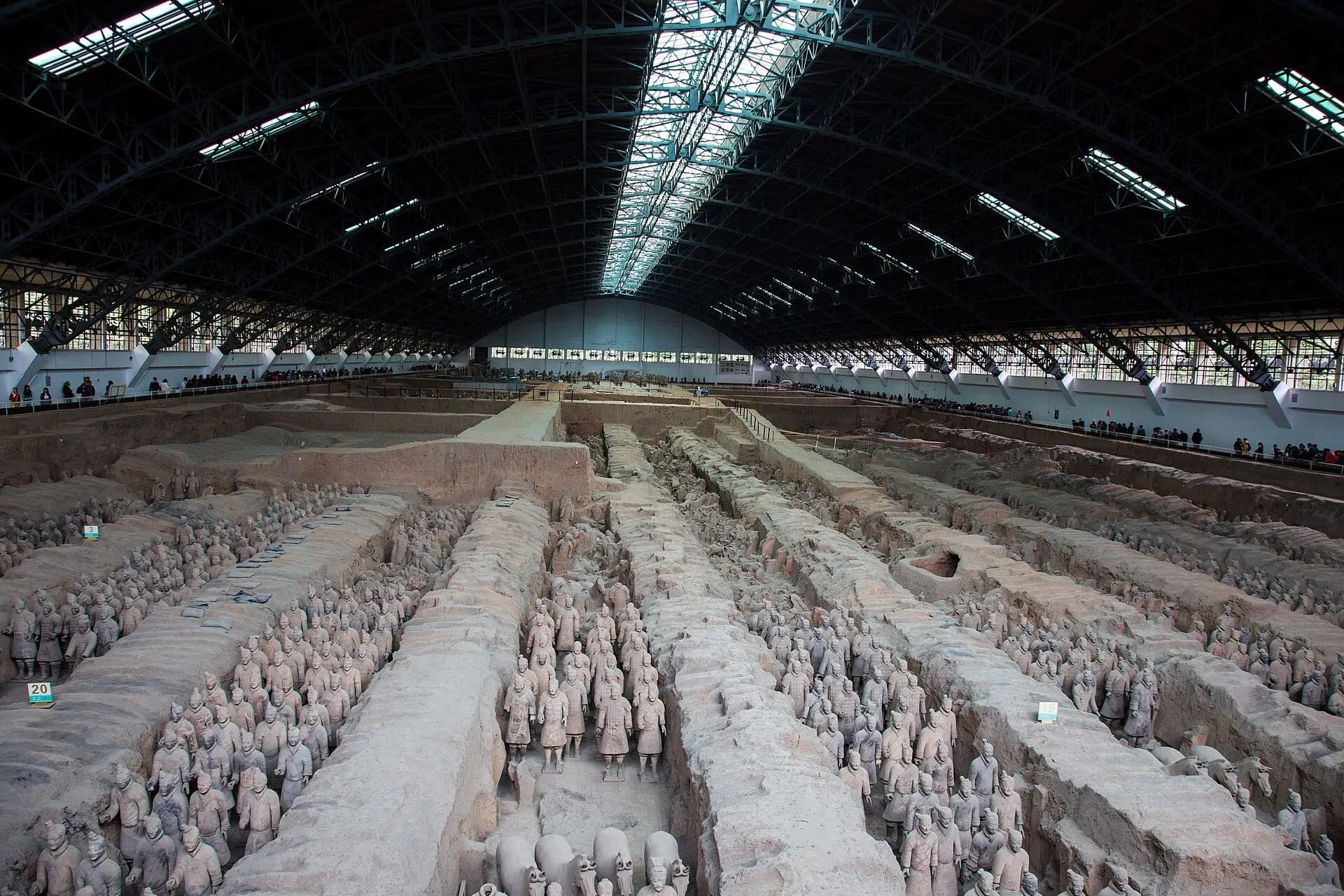
Terracotta Army (兵马俑)
The 2,200-year-old army of 8,000+ life-size clay soldiers guarding the tomb of the First Emperor, discovered 1974. 1 h east of the city. ¥120. Allow 3–4 hours.
Wikimedia Commons · CC
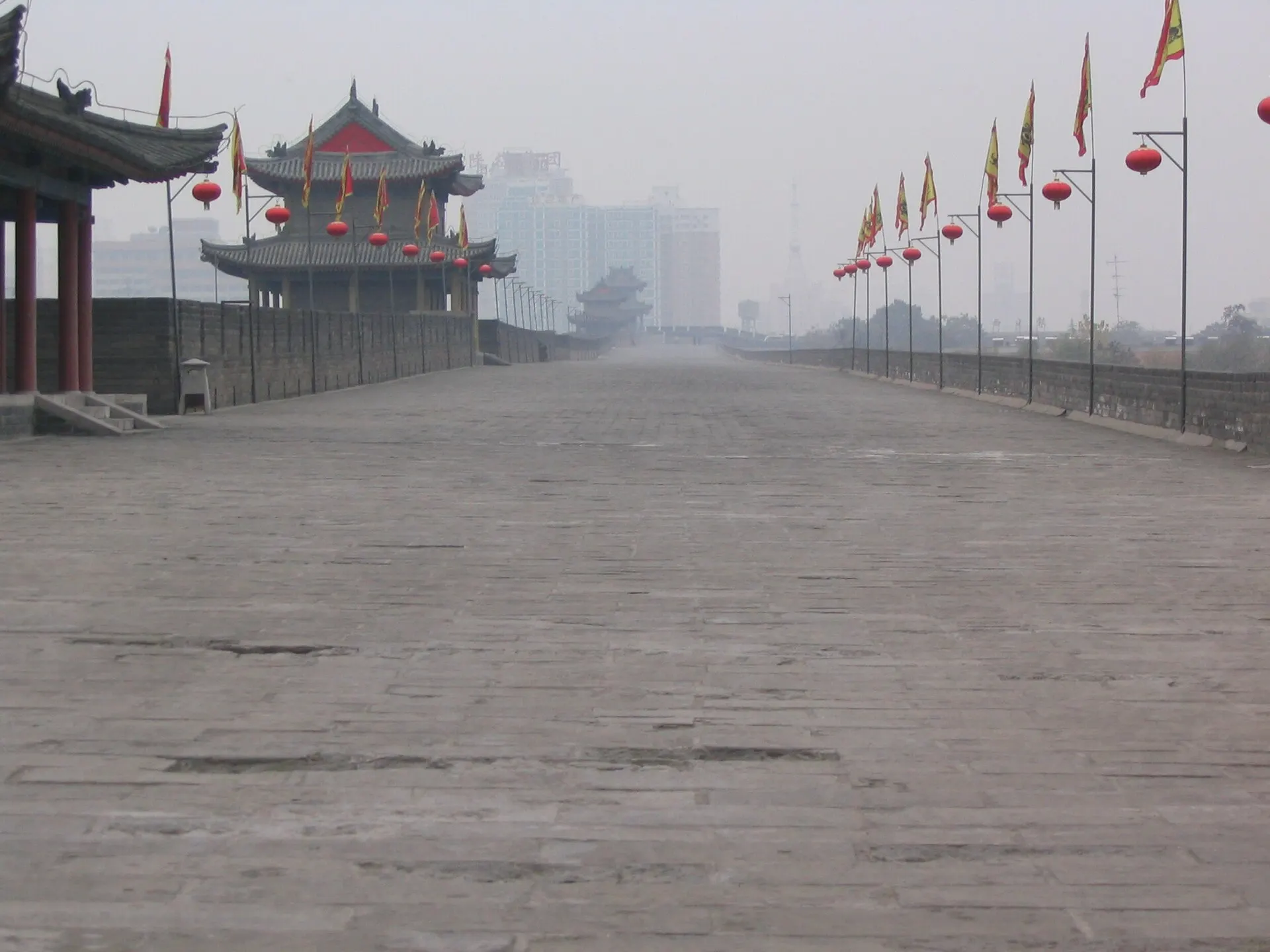
Xi'an City Wall (城墙)
The best-preserved ancient city wall in China, a 14-km Ming-dynasty rectangle you can bike end-to-end in 2 h. ¥54. Sunset is the magic time.
Wikimedia Commons · CC
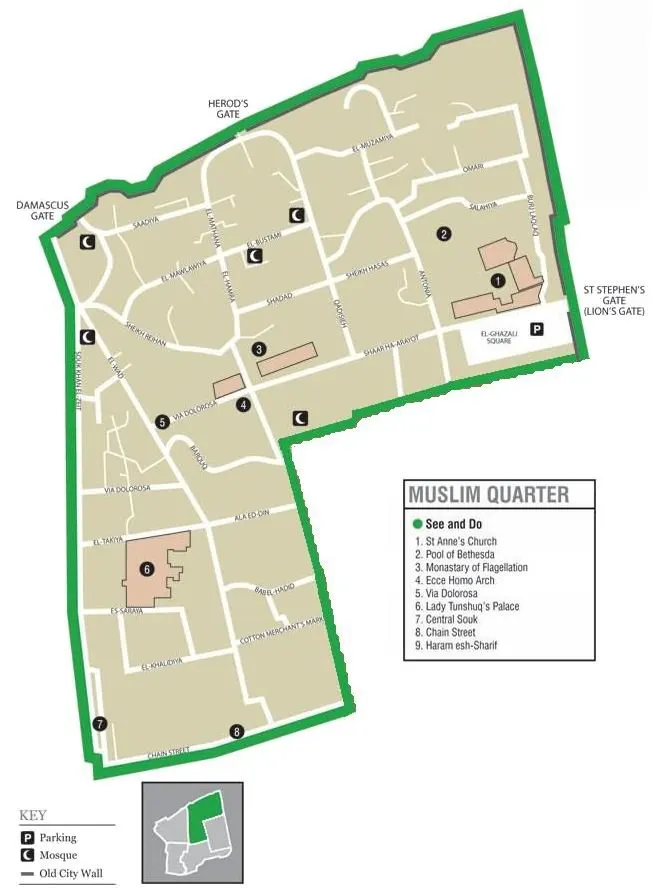
Muslim Quarter (回民街)
A 1,000-year-old Hui Muslim quarter of street food, the Great Mosque, and the Drum Tower. The culinary and atmospheric heart of Xi'an. Free to walk.
Wikimedia Commons · CC
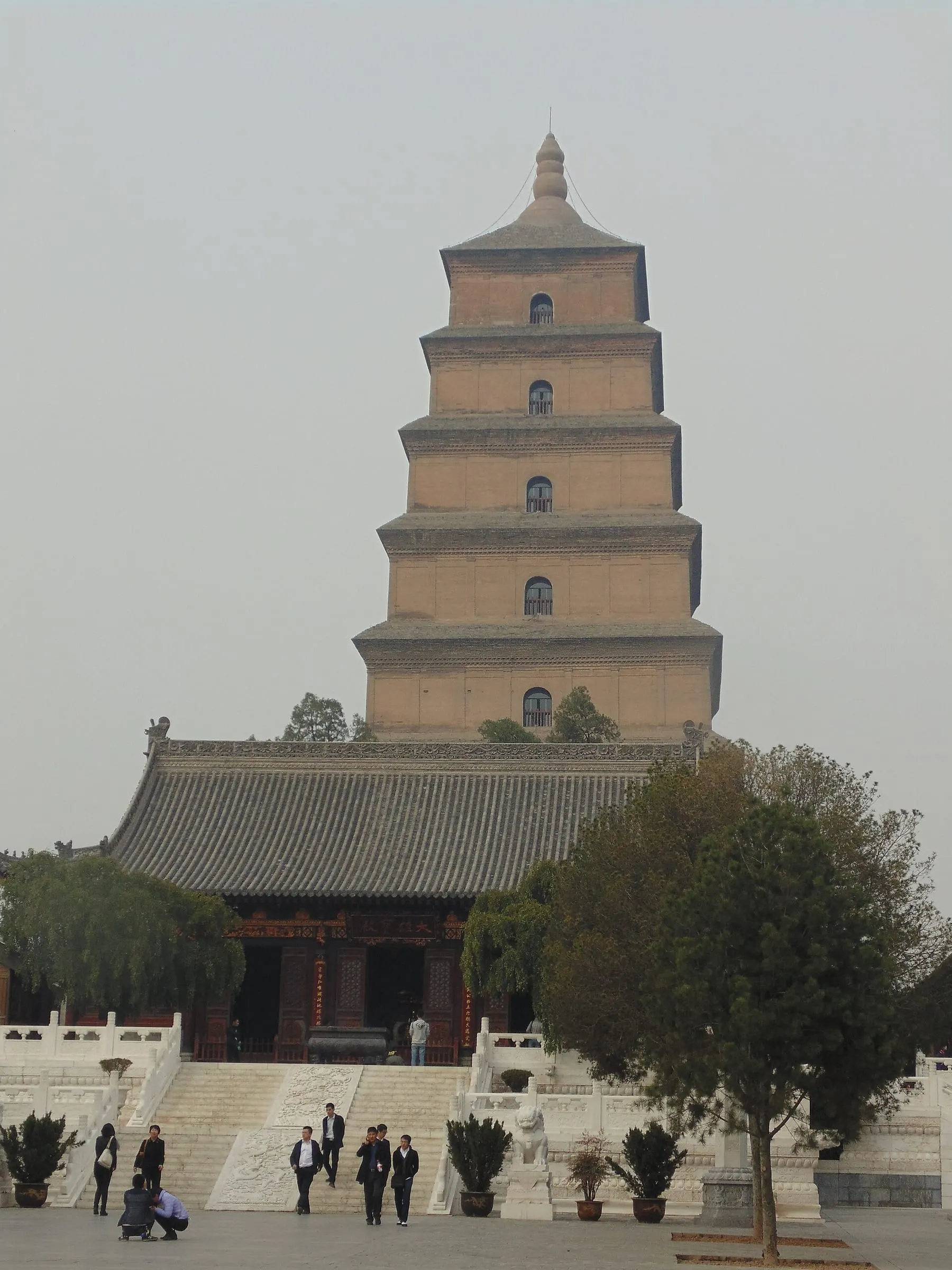
Big Wild Goose Pagoda (大雁塔)
A 7-storey Tang-dynasty Buddhist pagoda (652 CE) built to house scriptures Xuanzang brought from India. ¥30; the North Square fountain show at night is free.
Wikimedia Commons · CC
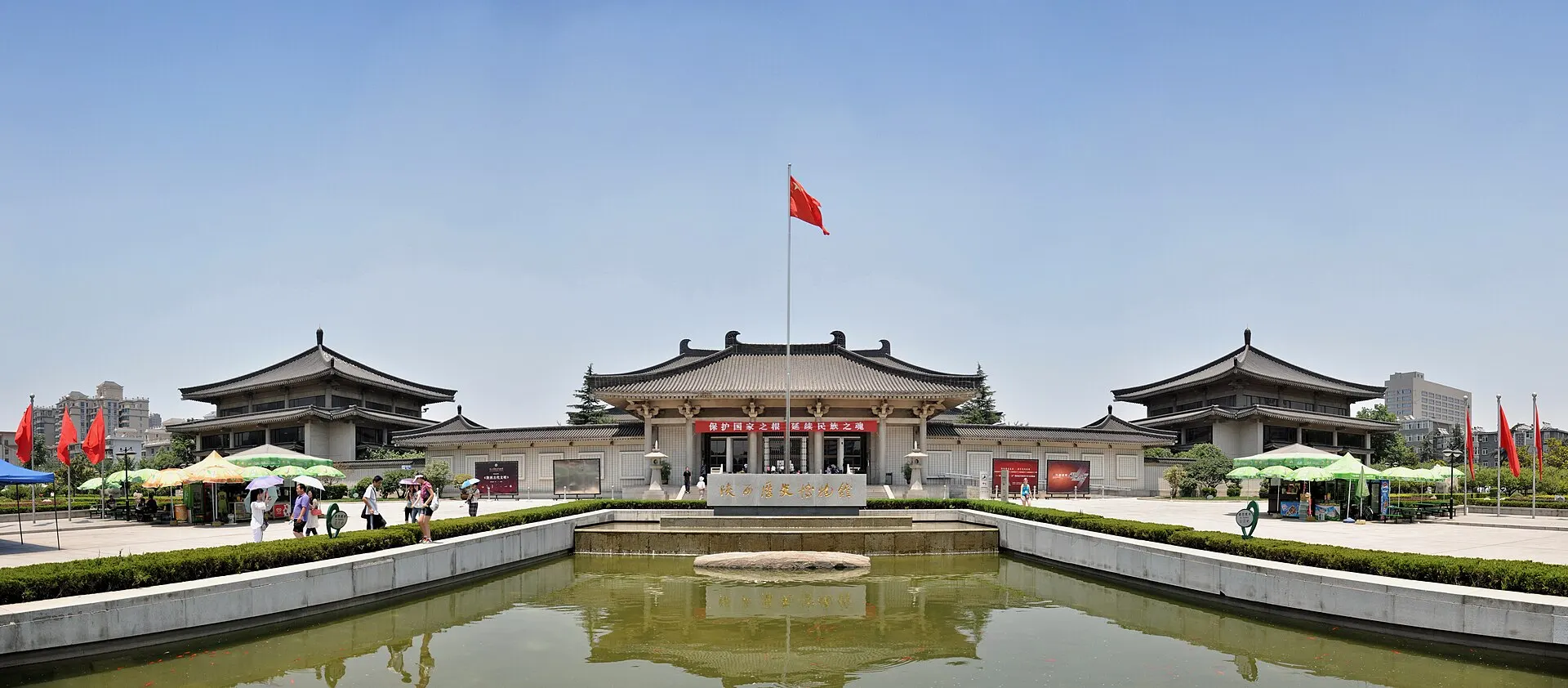
Shaanxi History Museum
One of the great museums of China — the treasures of 13 dynasties, from Zhou bronzes to Tang gold. Free (book ahead) or ¥30 for the special hall. Allow 3 hours.
Wikimedia Commons · CC
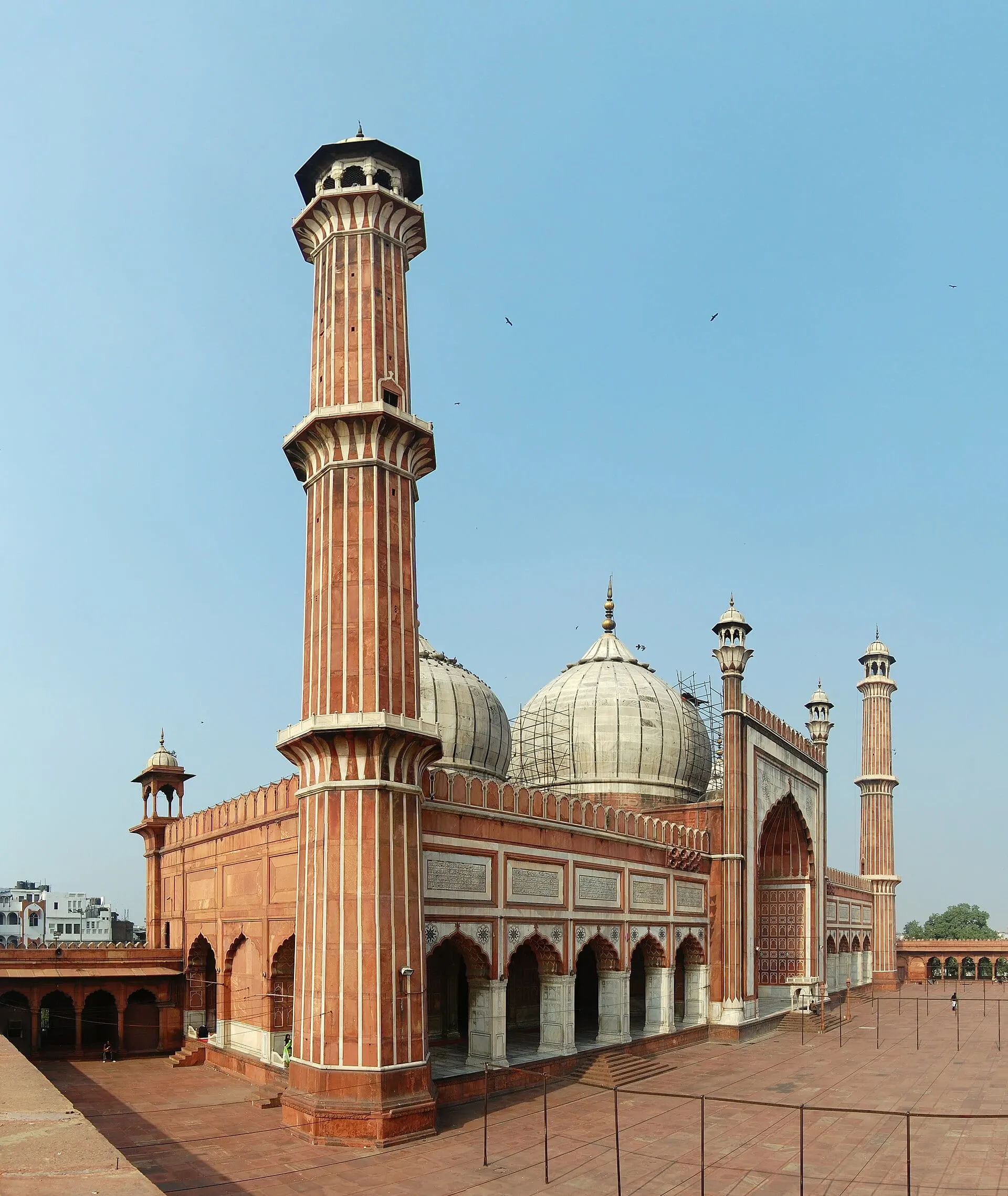
Great Mosque (大清真寺)
A 1,300-year-old mosque built in Chinese temple architecture — pagodas, gardens, and pavilions rather than domes. One of the most beautiful and unusual mosques in the world. ¥25.
Wikimedia Commons · CC
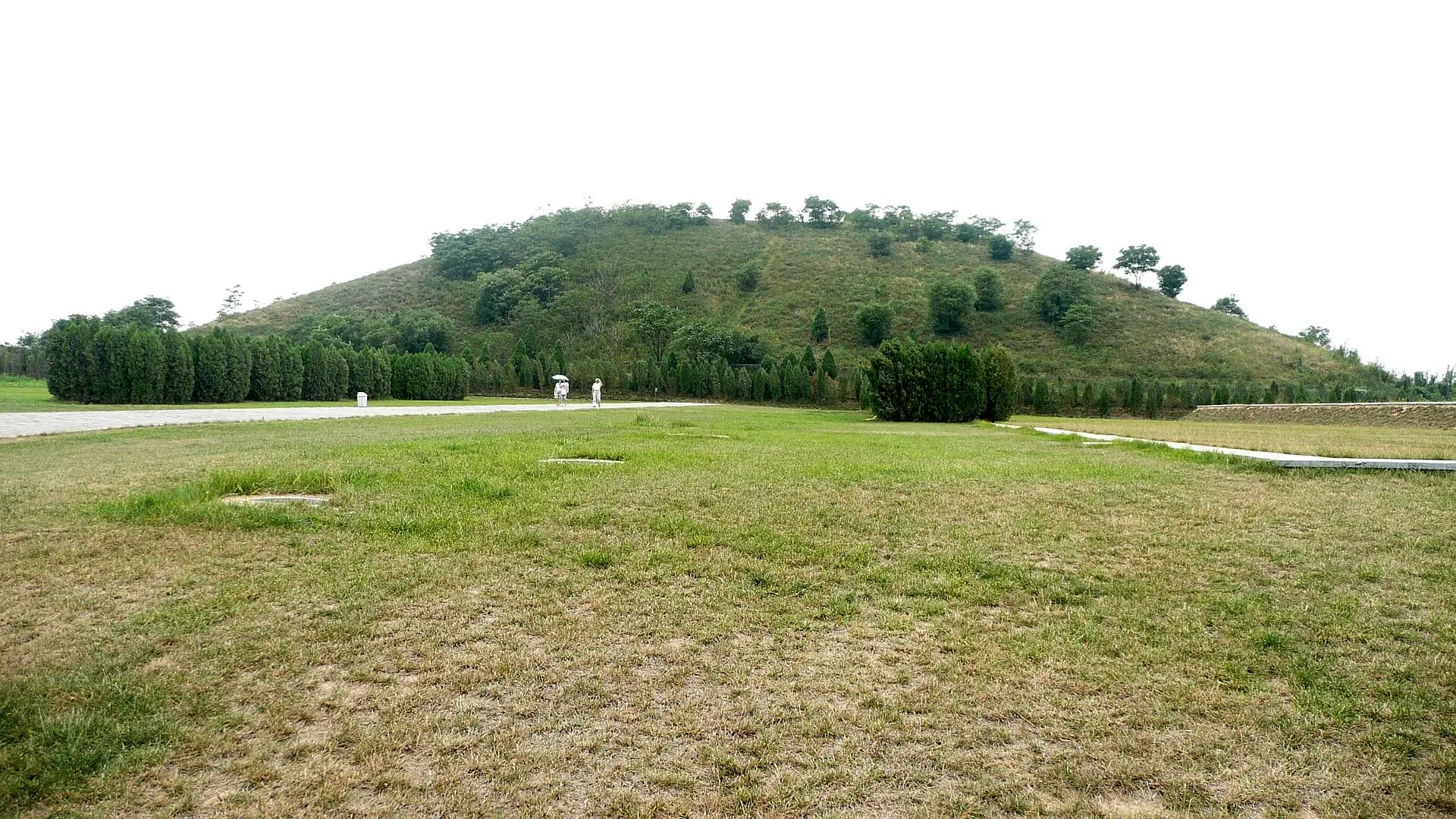
Han Yang Ling Mausoleum
The tomb of the Han emperor Jingdi, with miniature terracotta figures, chariots, and animals in glass-floored pits — the intimate, uncrowded counterpart to the Terracotta Army. ¥60. Near the airport.
Wikimedia Commons · CC
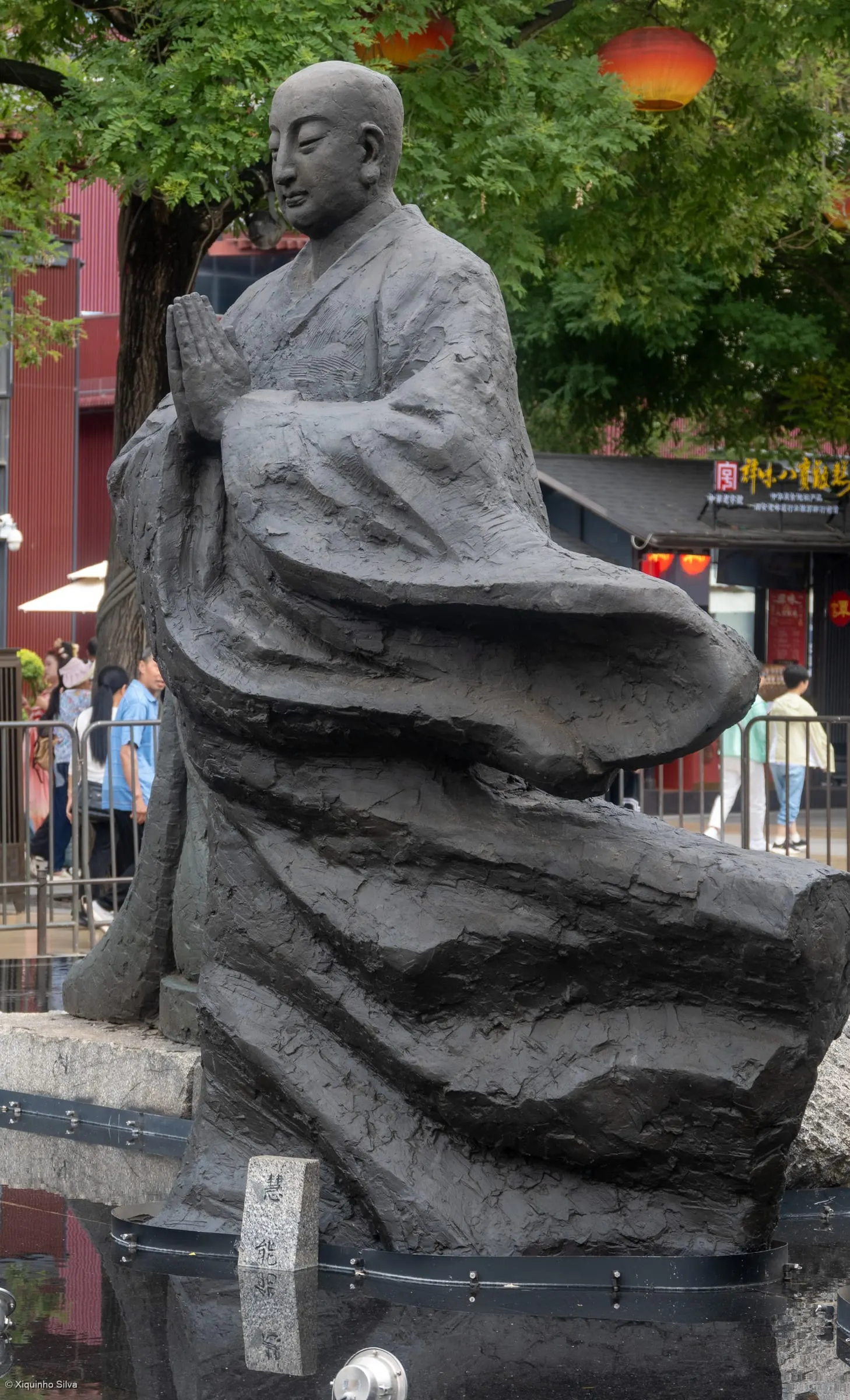
Grand Tang Mall (大唐不夜城)
A spectacular 1.5-km pedestrian avenue of Tang-style pavilions, illuminated arches, live Tang performances, and food stalls — the city's signature night walk. Free.
Wikimedia Commons · CC
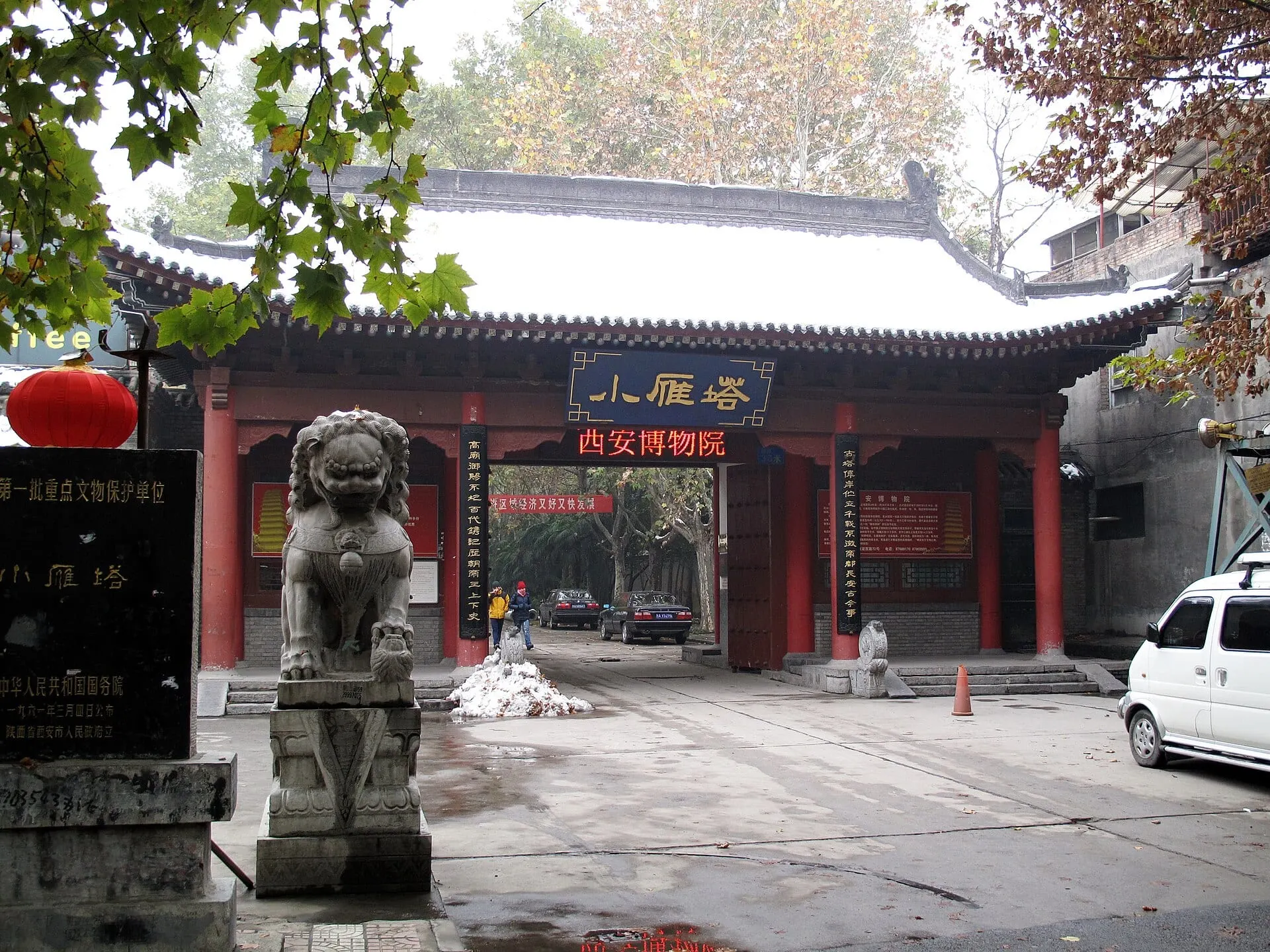
Small Wild Goose Pagoda and Jianfu Temple
A smaller, more intimate Tang pagoda (707 CE) and its temple garden, a quieter counterpart to the Big Wild Goose Pagoda. The pagoda was truncated by a 16th-century earthquake. Free.
Wikimedia Commons · CC
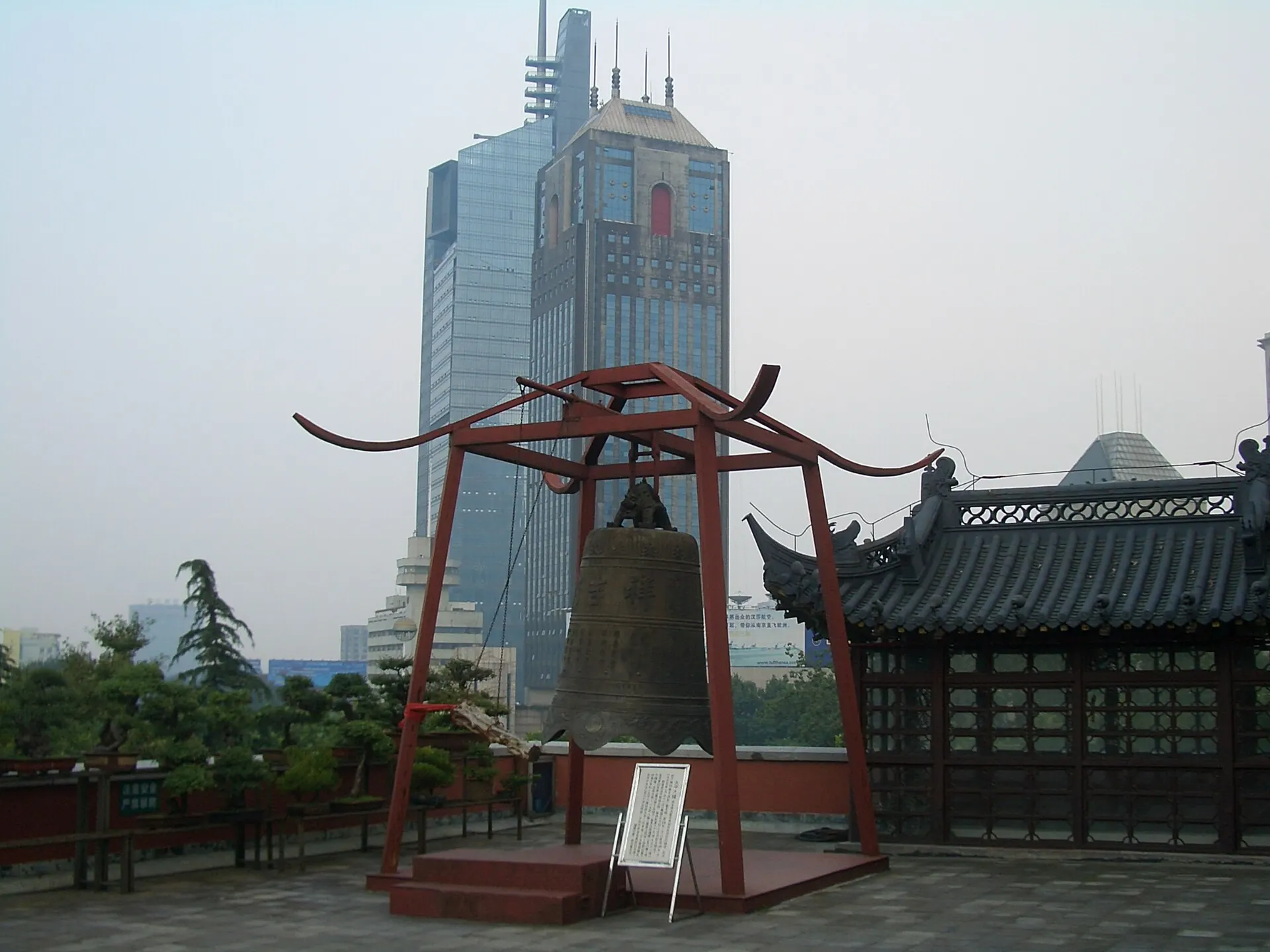
Drum and Bell Towers
The Ming-dynasty towers at the centre of the old city — the Drum Tower marks the Muslim Quarter entrance, the Bell Tower marks the city centre crossroads. Climb either for ¥30 at sunset.
Wikimedia Commons · CC
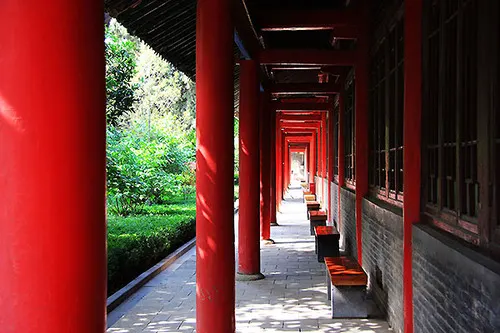
Forest of Steles (碑林博物馆)
A museum of over 3,000 stone steles — the largest collection of ancient Chinese stone inscriptions, including the Nestorian Stele and the Confucian classics. A scholar's treasure. ¥65.
Wikimedia Commons · CC
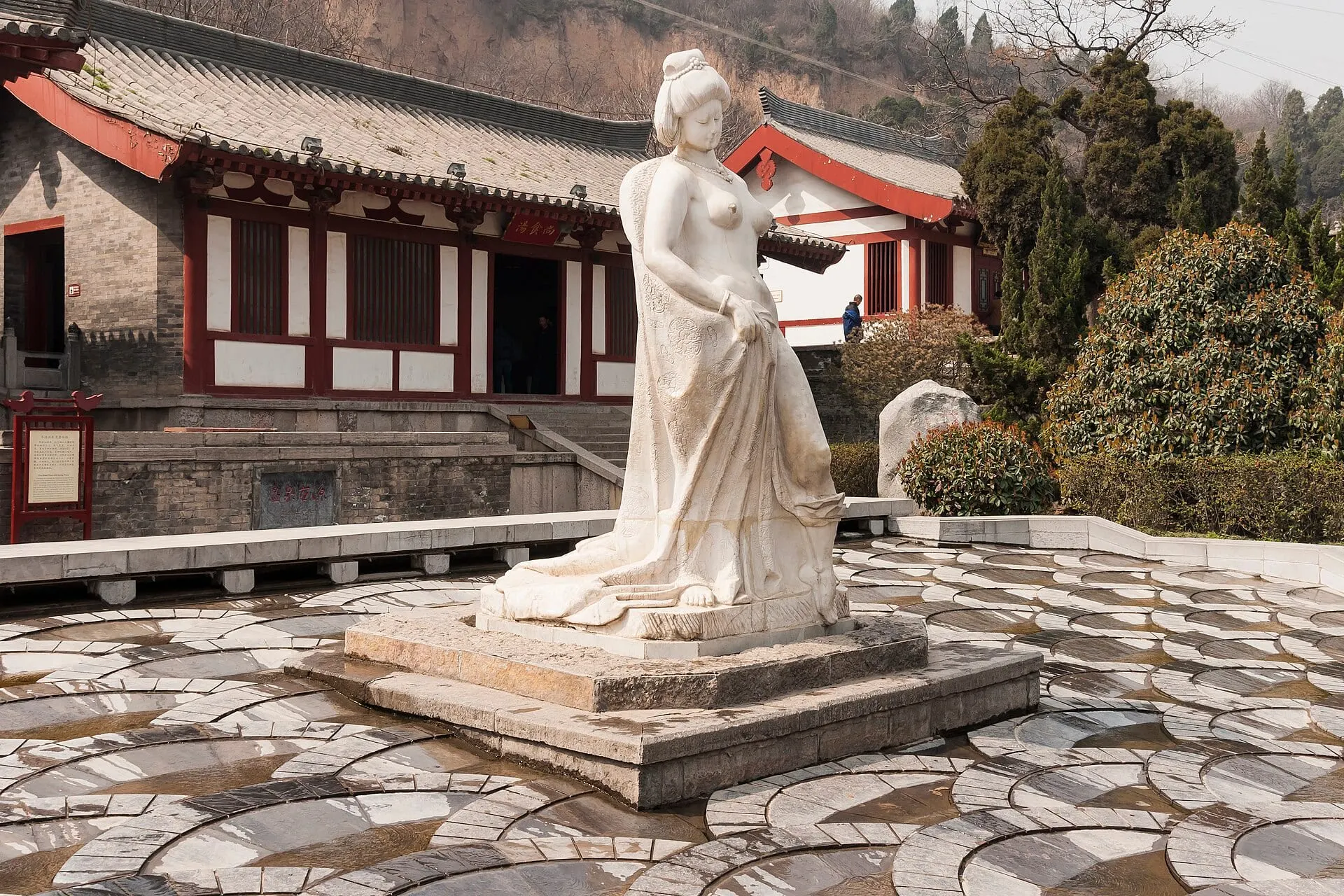
Huaqing Palace and Mount Li
A Tang-dynasty imperial hot-spring palace at the foot of Mount Li, famed for the Xuanzong–Yang Guifei romance and the 1936 Xi'an Incident. Combine with the Terracotta Army. ¥120, plus the evening 'Song of Everlasting Sorrow' show.
Wikimedia Commons · CC
Frequently asked questions
- ¿Cómo llego a los Guerreros de Terracota?
- Los Guerreros están a 40 km al este del centro de Xi'an. Opciones: (1) autobús 306/914 desde la estación de tren (¥7, 1 hora), (2) tour organizado (¥400-600 incluyendo transporte y guía), (3) taxi/DiDi (~¥150 ida y vuelta, 1 hora cada sentido).
- ¿Vale la pena pasar la noche dentro de las murallas?
- Sí — los hoteles dentro de las murallas están a poca distancia a pie de la mayoría de las atracciones. La muralla iluminada de noche es espectacular. La Pequeña Pagoda del Ganso Salvaje, el barrio musulmán y la torre de la campana están todos dentro de las murallas.
- ¿Xi'an es segura?
- Muy segura. Xi'an es una de las ciudades más seguras de China. Los principales riesgos son estafas menores (taxis, souvenirs falsificados en el mercado del barrio musulmán).
References
Related guides & destinations
Guide
China Wheelchair Accessibility Guide 2026: Realistic Expectations
China is improving on accessibility but is far behind the West. Modern airports and 4-star+ hotels are accessible; ancient streets, older me
Guide
China Travel Statistics 2026: Inbound Tourism by the Numbers
132.5 million inbound visitors in 2025, 38+ visa-free countries, $50–$300+ daily budgets, 47,000 km of HSR, and a top-10 Global Peace Index