Chengdú Travel Guide 2026
La capital de Sichuan y hogar de los pandas gigantes. Hotpot picante, la presa de Dujiangyan y la base de cría de pandas más famosa del mundo.
Last updated:
Quick Answer
Chengdú es la capital relajada de la provincia de Sichuan, mejor conocida por la Base de Cría e Investigación de Pandas Gigantes, el hotpot picante, y la cercana presa de Dujiangyan (2,200 años de antigüedad, patrimonio de la UNESCO). Dos o tres días son suficientes. La ciudad es un excelente punto de partida para excursiones al Monte Emei, el Buda Gigante de Leshan (todos Patrimonio de la Humanidad de la UNESCO) y el Parque Nacional Jiuzhaigou. La comida de Sichuan es la cocina más distintiva de China.
| Best time to visit | March–June and September–November. Summers (July–August) are hot and humid; winters are mild and grey. |
|---|---|
| Daily budget | $60 (backpacker) / $150 (mid-range) / $400+ (luxury) |
| Currency | CNY (¥) — Alipay and WeChat Pay accept foreign Visa/Mastercard as of 2024 |
| Language | Mandarin (local Sichuan dialect widely spoken); English in tourist areas and top hotels |
| Time zone | China Standard Time (UTC+8) |
| Last updated | 2026-06-15 |
¿Qué es lo más famoso de Chengdú?
La Base de Investigación y Cría de Pandas Gigantes es la atracción #1 — ver pandas en su hábitat natural es uno de los encuentros con vida silvestre más memorables de Asia. Más allá de los pandas, Chengdú es famosa por: el hotpot picante, la cocina de Sichuan (mapo tofu, kung pao chicken, dan dan noodles), la presa de Dujiangyan y el cercano Buda Gigante de Leshan (71m de altura, tallado en una roca).
¿Cómo llego de Xi'an a Chengdú?
Tren de alta velocidad desde Xi'an Norte hasta Chengdú Este: 3-4 horas, ¥260-450 segunda clase, 30+ trenes diarios. Vuelo desde Xi'an: 1.5 horas. Conducir: 8-10 horas por la autopista G5.
¿Puedo hacer una excursión de un día al Buda Gigante de Leshan?
Técnicamente sí, pero es un día completo (3 horas en tren cada sentido + 2-3 horas en Leshan). Mejor pasar al menos 1 noche en Chengdú, hacer un día completo en Leshan y otro en la base de pandas. Considera la opción de pasar la noche en Leshan para una experiencia más relajada.
Top attractions
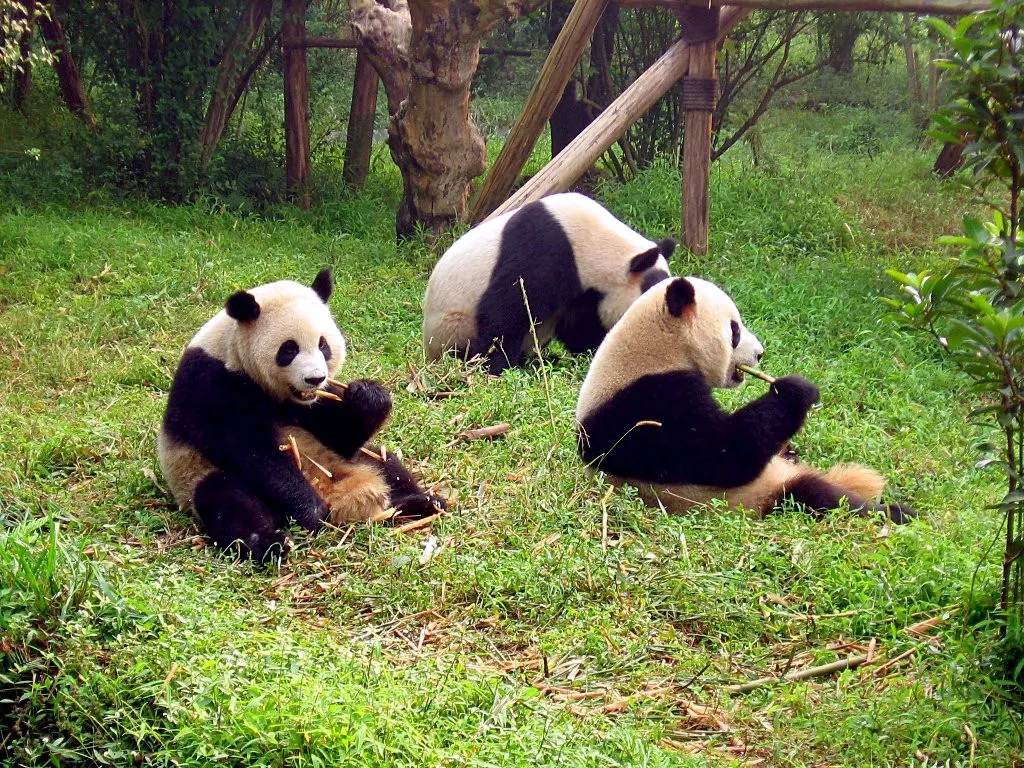
Chengdu Research Base of Giant Panda Breeding
The best place in the world to see giant pandas — 60+ residents in a forested research base 30 minutes north of the city. Visit 7:30–10 am when pandas are active. ¥55.
Wikimedia Commons · CC
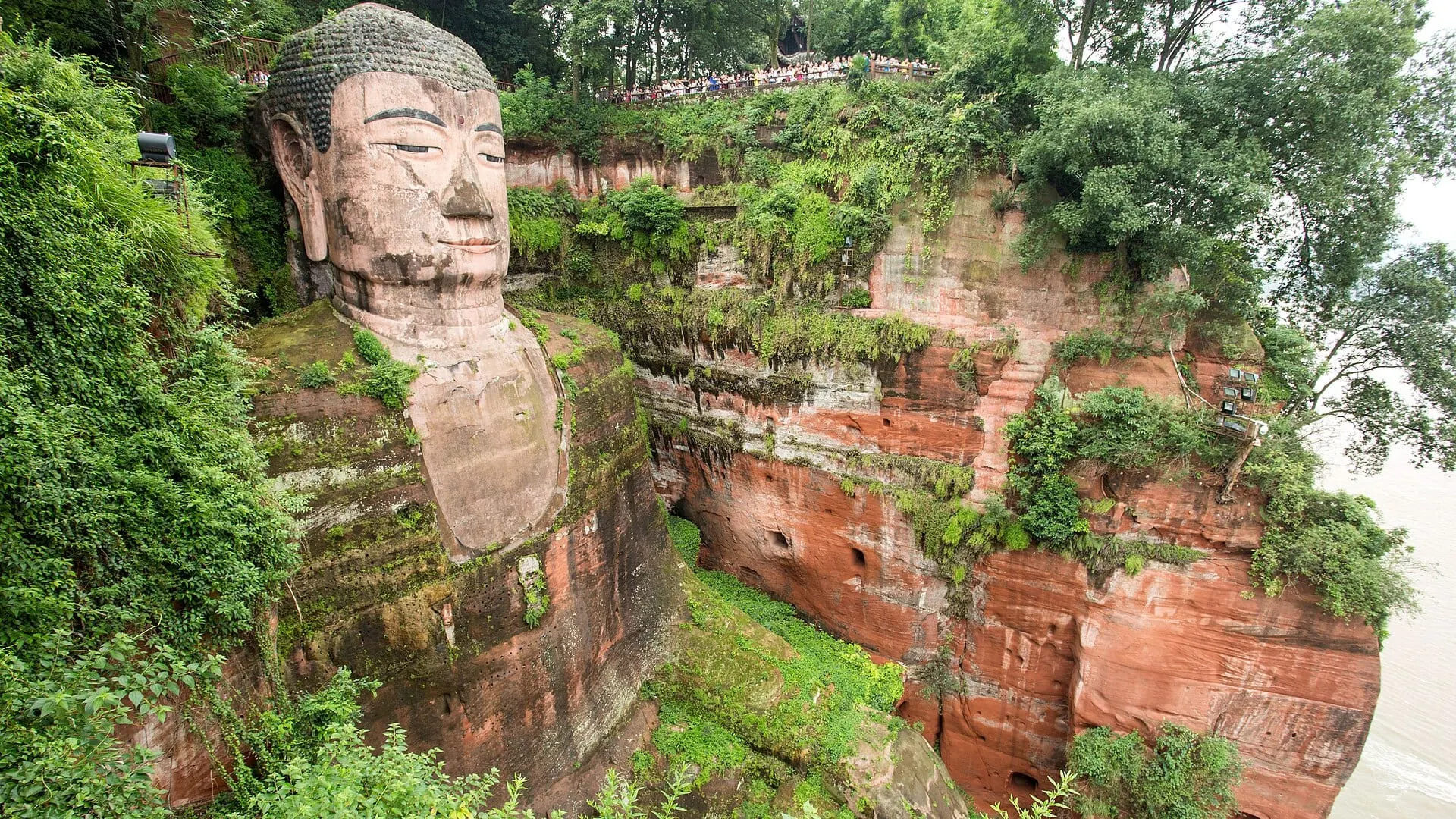
Leshan Giant Buddha
A 71-metre stone Buddha carved into a cliff face in the 8th century — the largest pre-modern stone statue in the world, at the confluence of three rivers. Day trip, 1.5 h by HSR or car. ¥80.
Wikimedia Commons · CC

Jinli Ancient Street
A reconstructed Qing-era pedestrian street beside the Wuhou Shrine, full of street food, teahouses, lanterns, and Sichuan opera. Atmospheric at dusk and night. Free.
Wikimedia Commons · CC
People’s Park (Renmin Gongyuan)
The soul of old Chengdu: the century-old Heming Teahouse, mahjong players, ear-cleaners, match-making corners, and the most relaxed afternoon in any Chinese city. Free.
Wikimedia Commons · CC
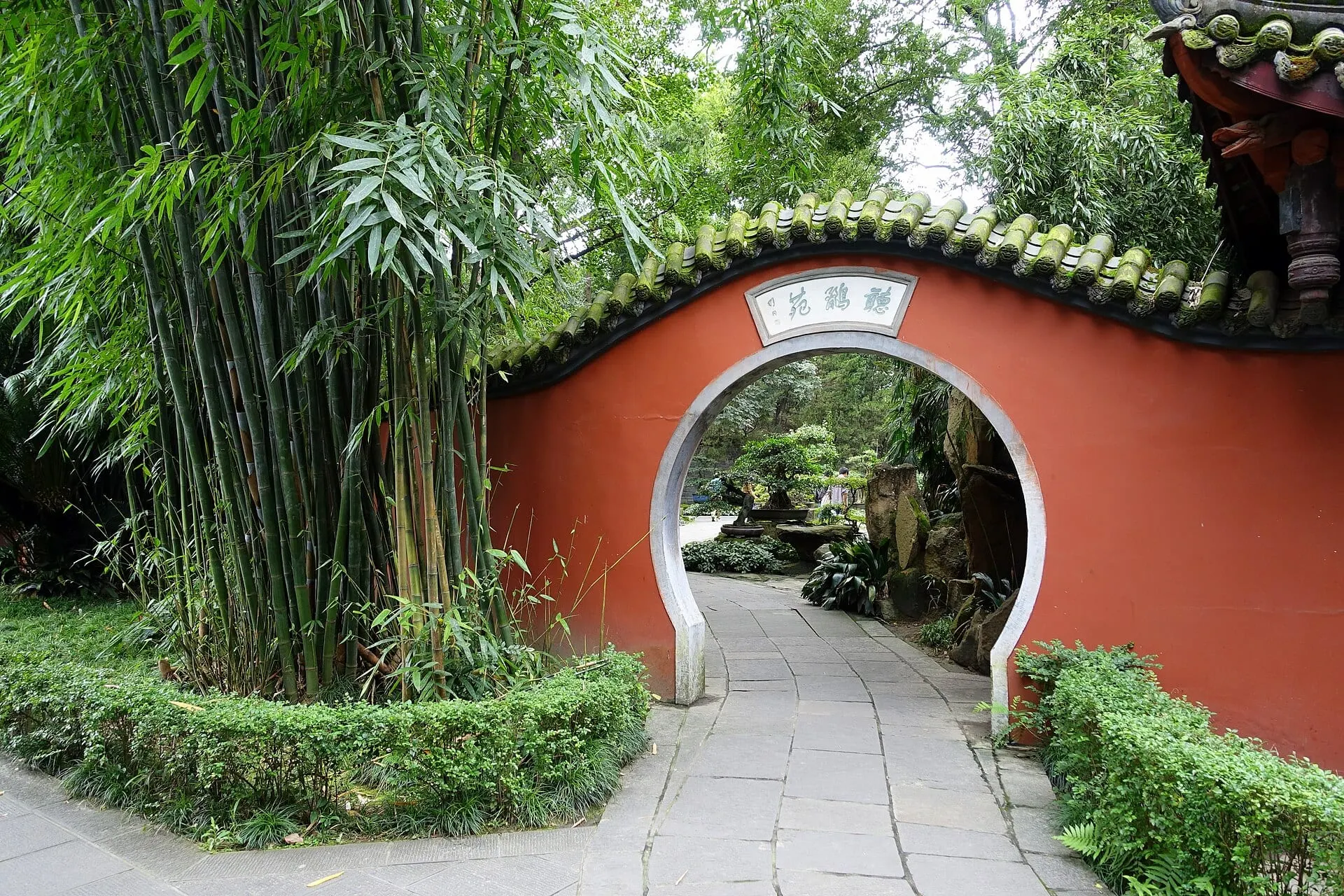
Wuhou Shrine
The 6th-century temple complex dedicated to Zhuge Liang and the Shu Han kingdom of the Three Kingdoms era. The most important Three Kingdoms site in China. ¥50.
Wikimedia Commons · CC
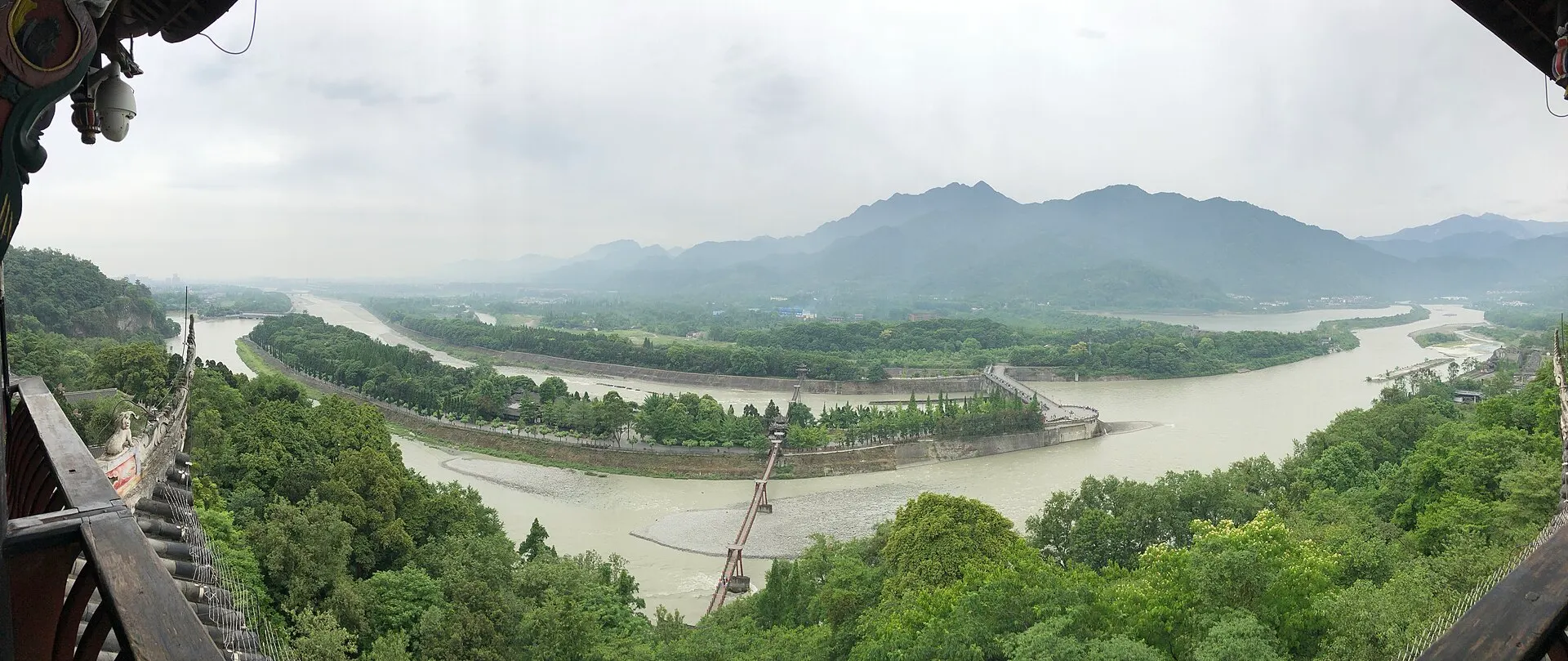
Dujiangyan Irrigation System
A 2,200-year-old engineering marvel that still irrigates the Sichuan plain, built by Li Bing in 256 BCE — a UNESCO site. Day trip, 1 h by HSR. ¥80.
Wikimedia Commons · CC
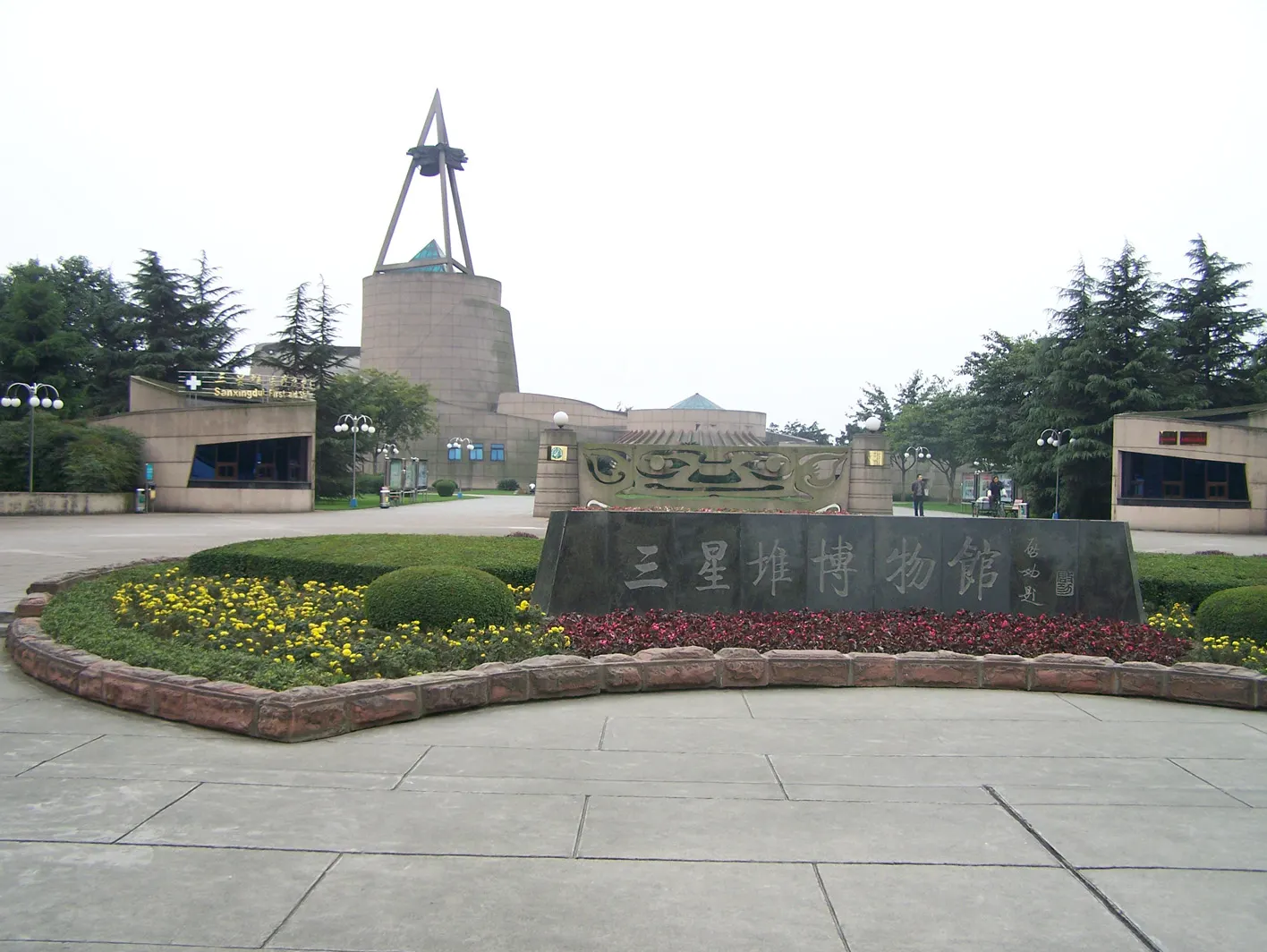
Sanxingdui Museum
A spectacular museum of the 3,000–5,000-year-old Sanxingdui civilisation: bronze masks with protruding eyes, gold sceptres, and mystery. 1.5 h north. ¥72.
Wikimedia Commons · CC
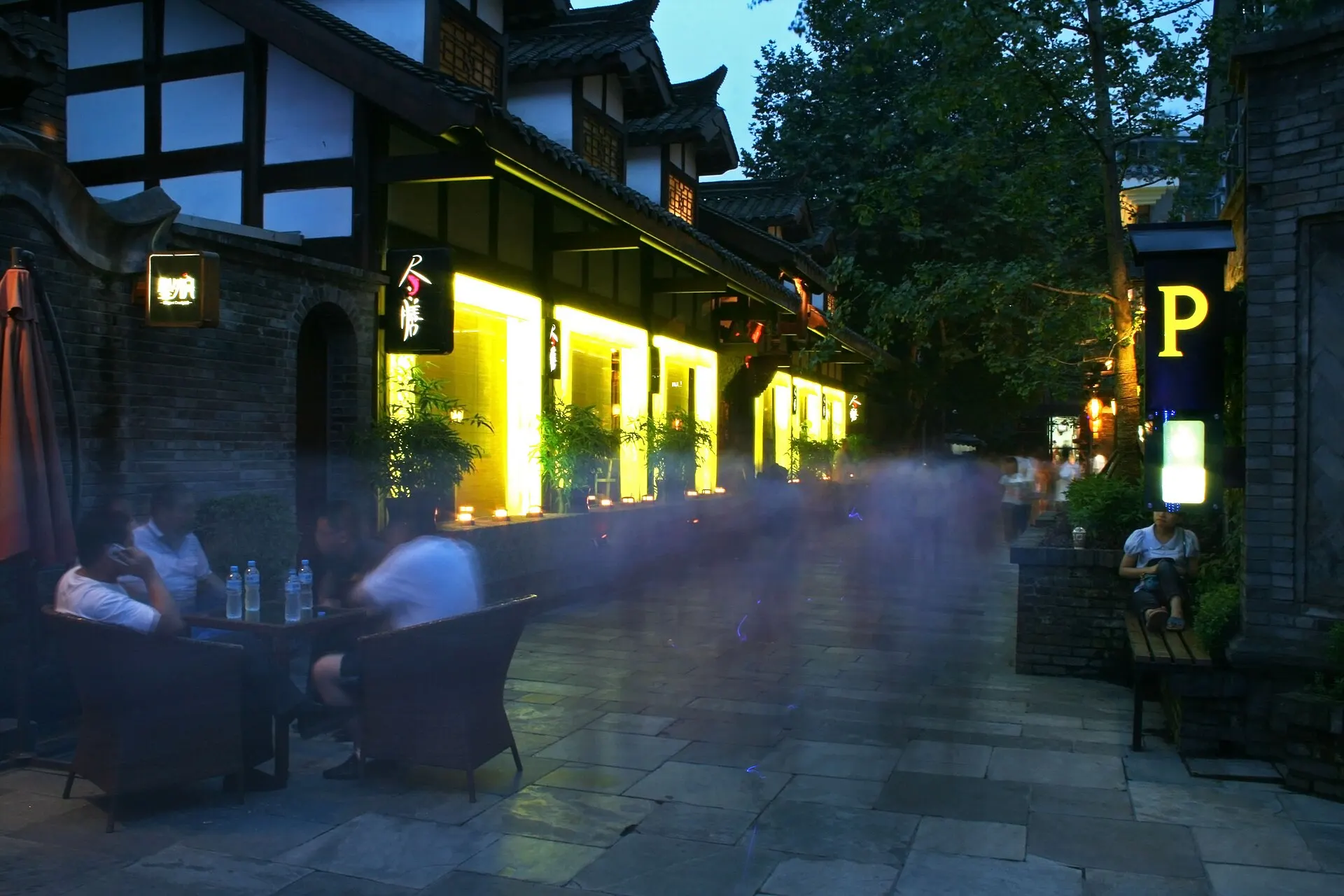
Wide and Narrow Alleys (Kuanzhai Xiangzi)
Restored Qing-era courtyard alleys of boutiques, teahouses, bars, and street food — the trendier counterpart to Jinli. Free.
Wikimedia Commons · CC
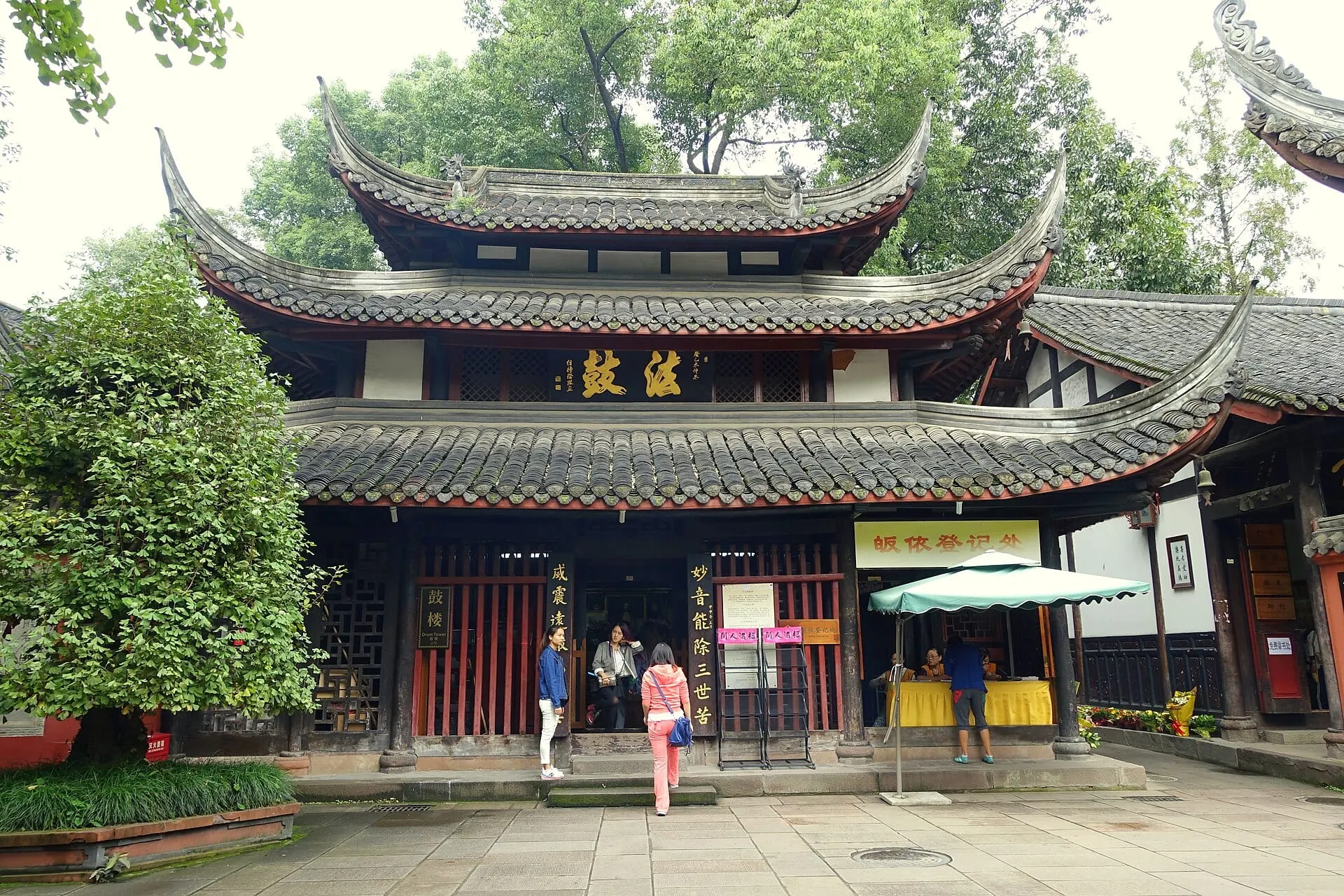
Wenshu Monastery
A working Tang-dynasty Buddhist monastery in the city centre, with a famous vegetarian restaurant and teahouse in its gardens. The calm heart of Chengdu. Free.
Wikimedia Commons · CC
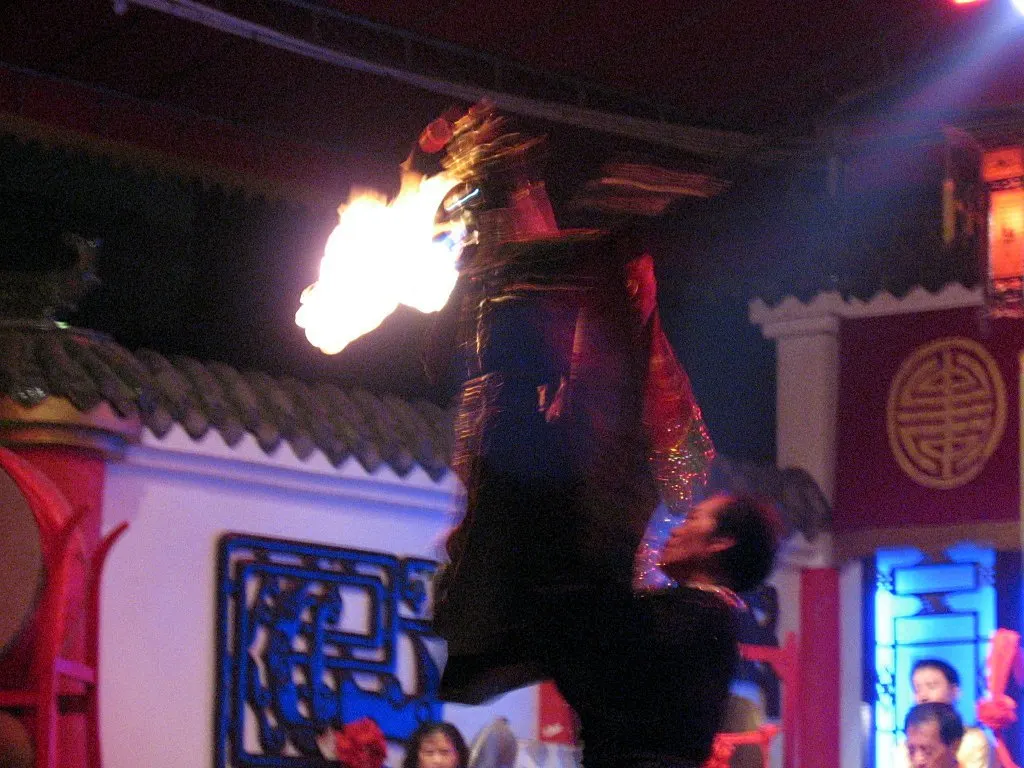
Sichuan Opera and Face-Changing
The signature Sichuan performing art, featuring the lightning-fast face-changing (bian lian) where masks switch in a fraction of a second. Evening show, ¥150–280.
Wikimedia Commons · CC
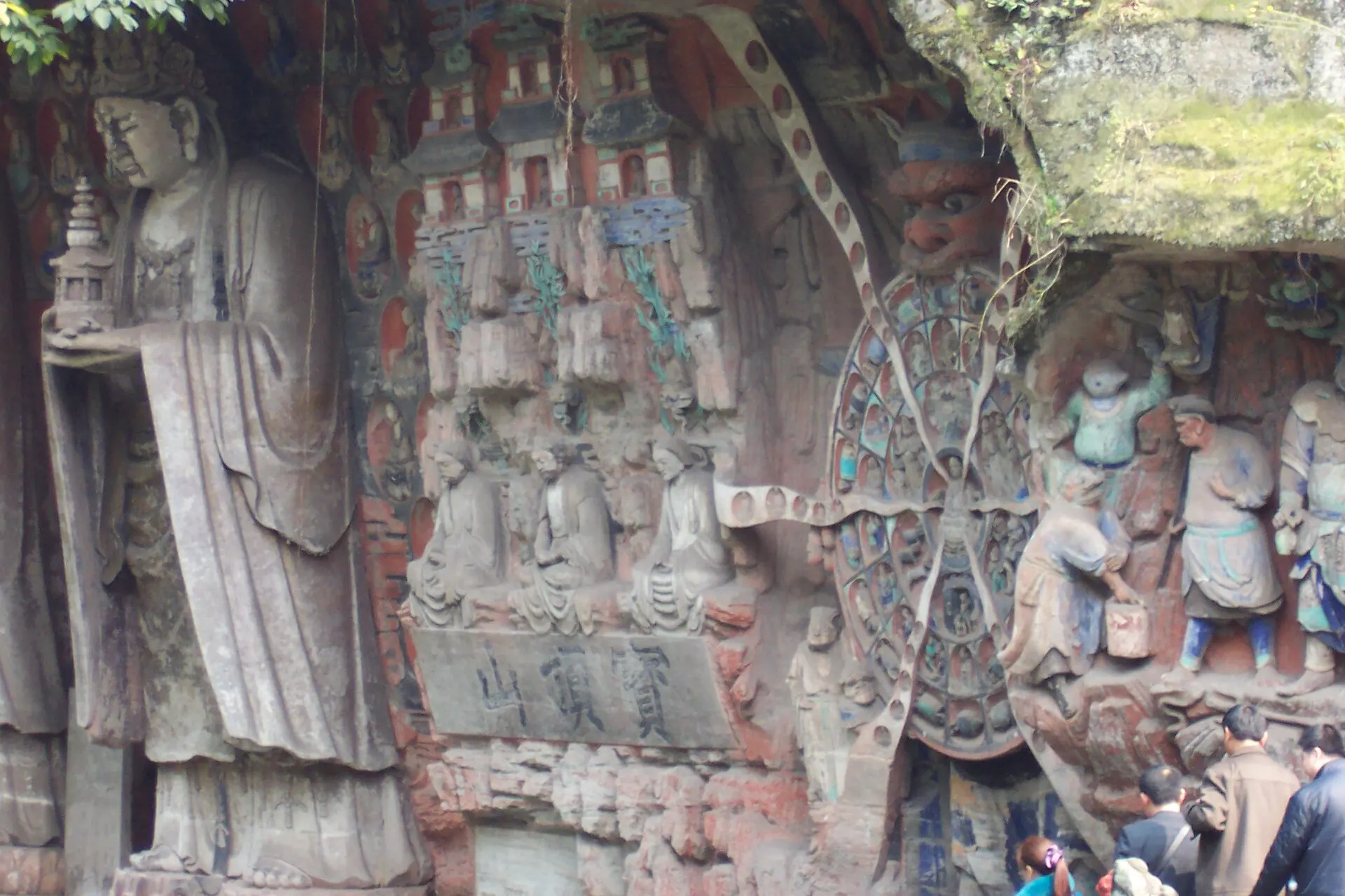
Dazu Rock Carvings
A UNESCO-listed series of 9th–13th-century Buddhist, Confucian, and Daoist cliff carvings, among the finest grotto art in China. Day trip, 2 h by car. ¥115.
Wikimedia Commons · CC
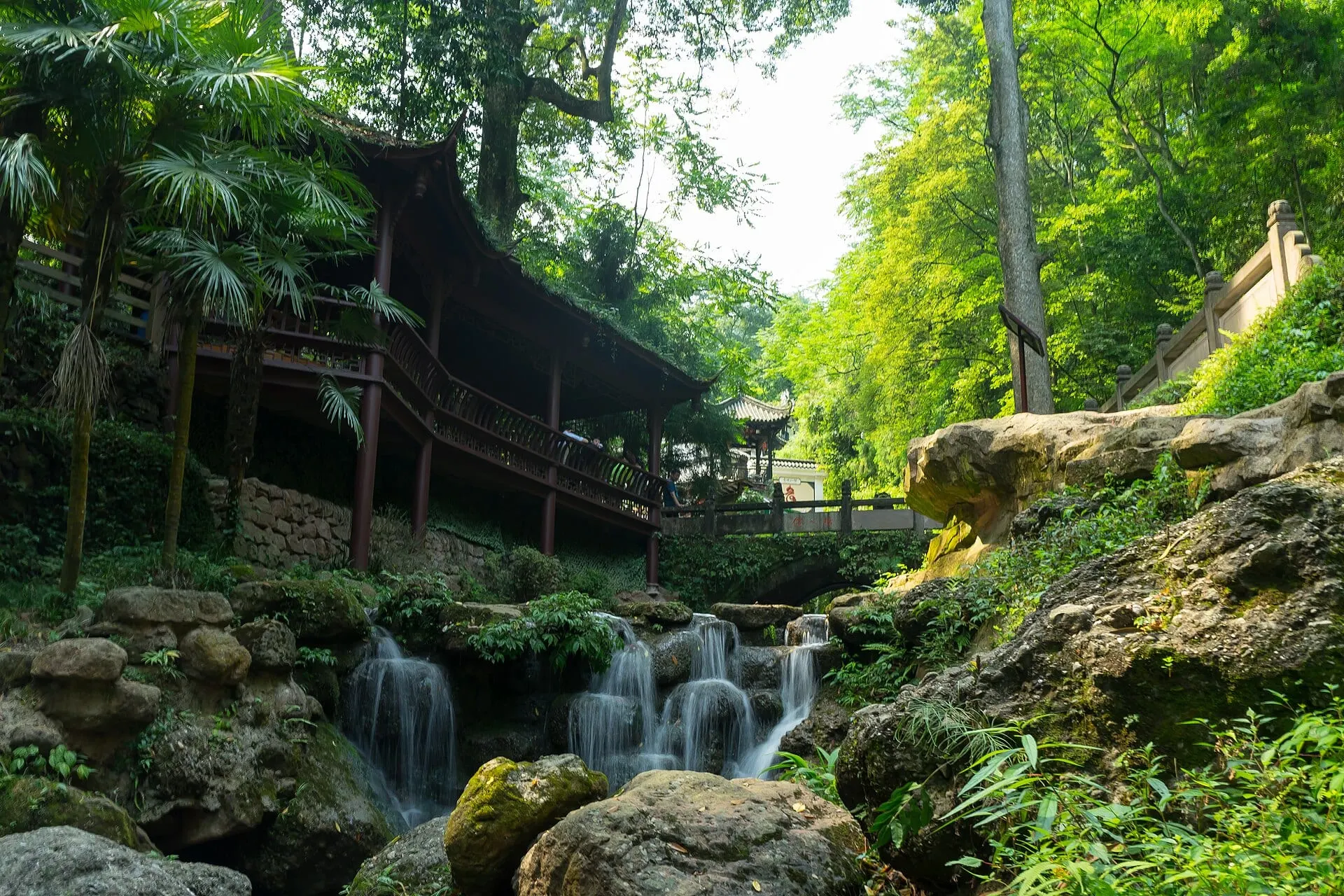
Mount Qingcheng
The birthplace of Taoism and a UNESCO site — a forested mountain of Taoist temples and trails, the rear mountain wilder. Day trip from Chengdu or Dujiangyan. ¥80.
Wikimedia Commons · CC
Frequently asked questions
- ¿Cuál es la mejor época para ver pandas en Chengdú?
- Los pandas son activos todo el año. La mejor hora del día: 8-11 AM (más activos, alimentándose). Evita los días de lluvia (los pandas se quedan en interiores). La base abre a las 7:30 AM — llegar temprano te da las mejores fotos y menos multitudes.
- ¿Puedo sostener un panda?
- No — los pandas gigantes son demasiado grandes y peligrosos para sostenerlos. Solo los voluntarios del programa "Panda Keeper" (duración 1 día, $400 USD, debe reservarse con 2+ meses de antelación) pueden interactuar con pandas jóvenes bajo estrecha supervisión.
- ¿Chengdú es accesible en silla de ruedas?
- Sí en general — la mayoría de las atracciones y los nuevos desarrollos de metro tienen accesibilidad. La Base de Pandas es parcialmente accesible (senderos de tierra, pendientes).
References
Related guides & destinations
Guide
China Wheelchair Accessibility Guide 2026: Realistic Expectations
China is improving on accessibility but is far behind the West. Modern airports and 4-star+ hotels are accessible; ancient streets, older me
Guide
China Travel Statistics 2026: Inbound Tourism by the Numbers
132.5 million inbound visitors in 2025, 38+ visa-free countries, $50–$300+ daily budgets, 47,000 km of HSR, and a top-10 Global Peace Index
Guide
2 Weeks in China: Classic Itinerary for 2026
Two weeks is the ideal length for a first China trip. This itinerary covers the Golden Triangle (Beijing, Xi'an, Shanghai) plus two bonus re